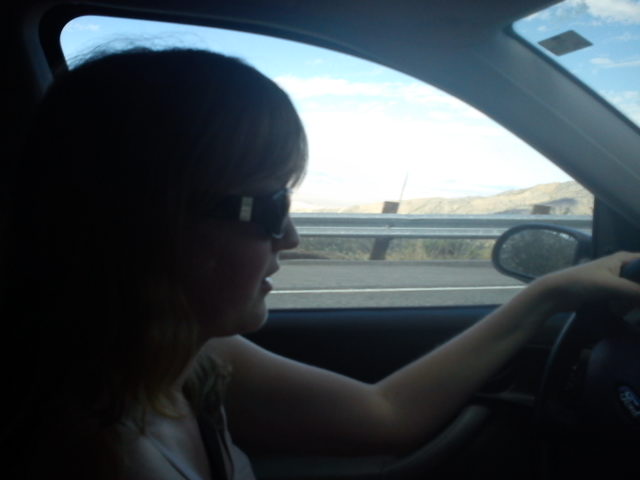
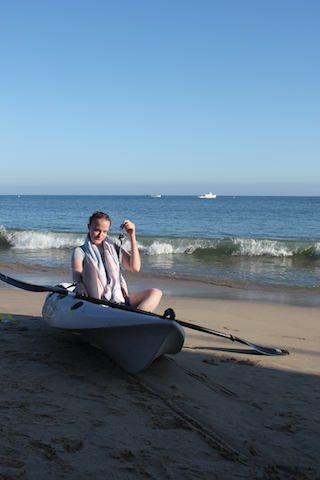
Megan Kayaking

The Key To Sea Kayaking – Part 1
 

By Megan Ritchie

About a month after I moved to Los Angeles, a friend and her girlfriend, Adrianna, invited me to go sea kayaking with them in Malibu. I’d been kayaking a handful of times, most recently on a family vacation to Lake Superior last summer, and was really excited to try it in the ocean.

On a Sunday afternoon, we drove the twenty or so miles from my house on the east side of Los Angeles, across the city and up the coast along the Pacific Coast Highway (or PCH, to us “locals”). Parking on the PCH, which runs right alongside the ocean, is impossible, but we eventually found a parking lot right next to the beach and dropped the ten bucks to park there. After locking all of our possessions in the trunk, I tucked my car key in a little pouch in my running shorts (pay attention to that detail – it comes in later), and set off. We scampered across the highway to the Malibu Surf Shack, which rents surf boards, paddleboards and, you got it, sea kayaks. After we ducked in to the little shop and our eyes adjusted to the dim light, the guy behind the counter asked if we’d been sea kayaking before. Sarah and Adrianna both nodded, yep, they’d been once before at the Surf Shack a handful of months earlier. I hesitated, and then said, “Sure, I’ve kayaked before.” Technically not on the ocean, but so be it.

“Well, good,” said the guy, who was every bit a surfer dude. “Wouldn’t want an inexperienced kayaker out on those waves today….they’re reaaaal rough, even for someone who knows what they’re doing.”

My heart began to pound as we signed off the waivers and put down the deposit.  Sarah, clearly the brains behind the operation—or at least the bravest of us all—led us out of the little shop. Adrianna and I both began talking about how we weren’t exactly “experienced kayakers.”

“Oh, we’ll be fine.” Sarah said, brushing us off.

Feeling that familiar rush of adrenaline and fear I always get from any rule-breaking or risk-taking because I am a coward and a square, I followed her around the side of the shop. We grabbed paddles and damp lifejackets and then waited for a lull in the traffic before running across the highway and back to the beach. The sea kayaks in bright citrus colors were stacked high in a trailer parked alongside the road. Another surfer dude from the Surf Shack helped us carry three down to the sand.

The waves were pounding along the beach. Adrianna and I gulped. Sarah, all confidence, tried to reassure us. I turned to the Surf Shack dude.

“Tell us, honestly,” I said. “Are we going to die?”

“What? No. You guys will be fine.”

“But we are not experienced sea kayakers, man.” I added the “man” there to let him know that even if we weren’t regular wave-paddlers, we were far from dorks. He seemed to pick up on how cool we were, because he said next in particularly soothing tones:

“Look, you’ll be fine. I promise.”

Sarah rolled her eyes, but Adrianna and I were willing to be reassured by anyone, dude or otherwise.

The guy continued, “All you have to do is wait for a lull in the waves and then run out as fast and as hard as you can and hop in the boat when you can’t run any farther. The waves here in Malibu come in bursts—they’ll be a couple minutes of hard waves and then they’ll die down.”

We all paused to look out on the waves. They did seem to be dying down. Sarah took the moment to leap into the water and run out with her boat. When she reached waist-height, she leapt into her boat and paddled out. She looked cool.

I’d missed my window at that point, and had to wait for another round of boat-crushing waves before I too took the plunge. Once the water calmed again, I pushed my boat into the water and high-stepped as far as I could. I leapt into my boat not as gracefully as Sarah but I got in all the same, and paddled quickly past the waves’ breaking point. Alright, maybe I wasn’t going to die. Maybe I was all drama, it was all in my head. There is no spoon. Adrianna and I exchanged a nervous laugh – we were just being silly, everything was fine.

I should note that this was only the second or third time I’d even seen the ocean, let alone been on the water. I’m from Minnesota originally and so “the beach” to me means a day near a lake where the biggest waves we get are from a passing speedboat pulling a couple kids on an inner tube behind it. So my cowardice, while a little pathetic, wasn’t entirely ungrounded.

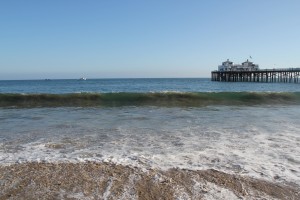
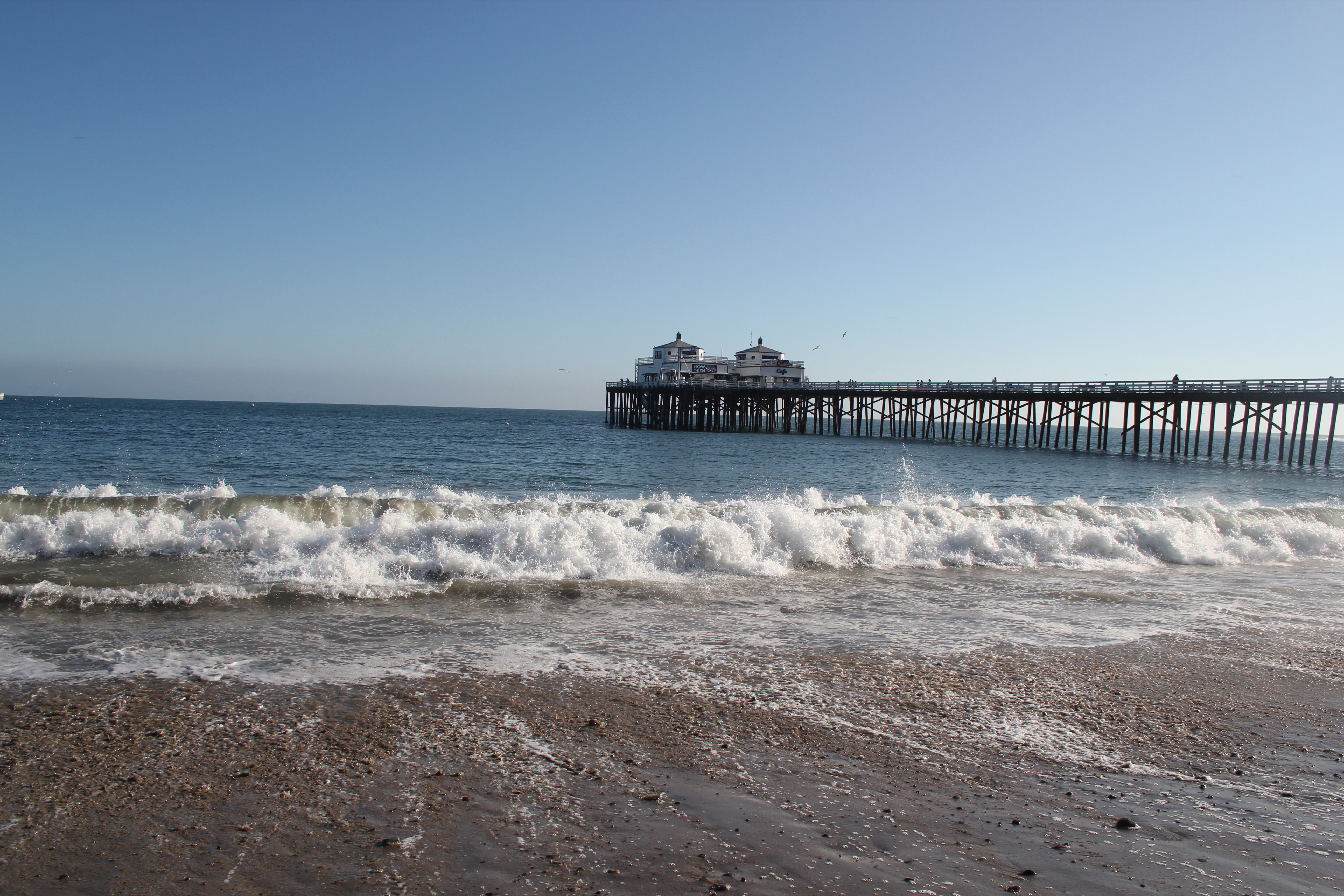
We paddled our boats out past the wooden pier. There were fishermen with long poles standing at the end of  it, and a few of them waved at us as we passed. It was a gorgeous afternoon, with barely a breeze and a cloudless sky. I looked around at the gentle waves and the rocky coastline, and kept having to tell myself “I live here now. This is my home now.” Sometimes, I find it amazing how huge the United States really are. I marveled how the beautiful coastline I was kayaking along was part of the same country as the rolling hills of prairie grass and wildflowers I’d ridden past only a few months earlier on bike rides in Minnesota.

As we made our way up the shore, we saw surfers up ahead; there was some kind of surfing competition going on up the beach. We paddled out farther to avoid them, and because (understandably) the waves looked even bigger there. We paddled for an hour or so before deciding to come back in and have lunch along the shore.

For the approach back to the beach, we were to do the same strategy as our way out: wait for the waves to calm before paddling. Sarah turned to us. “All you have to remember,” she said, “is to keep your boat at a 90 degree angle to the beach. Just head straight in. See, watch me.”

Sarah paddled forward hard for thirty or forty feet before sliding her boat gracefully onto the sand. Easy. Adrianna and I hesitated. She looked at me nervously. “I’m sure we’ll be fine,” I said, thrusting my chin forward bravely. I looked behind me to try to gauge if the waves had died down. Things looked fairly calm so I paddled toward the shore, making sure to stay perpendicular to the shoreline, as Sarah had instructed.

Adrianna followed suit, looking anxious. After my hour on the water, I was all calm now, a real ocean woman. Sure, I come from the middle of an enormous continent, and have lived in landlocked cities my whole life, but here I was, at my true roots. Humans emerged from the ocean thousands of years ago, shook off their gills and claimed their spot on land. And now, here I was, returning to my ocean homeland, victorious. The forces bigger than me were to be conquered, to bow before me. Yeah, I was an ocean conqueror! A Californian!!

I paddled harder for shore. Suddenly the waves lurched in front of me, taking my boat with them. I glanced over at Adrianna, who was struggling to keep her boat’s bow heading straight for shore. Her kayak pushed toward mine, and I paddled even harder away from her, trying to avoid a collision.

The waves were now coming in even harder, rolling us closer and closer to shore. Suddenly, an enormous wave overtook us, and took my boat and spun it parallel to the shore, like a crazed giant with a toy top, before flipping me over into the waves. There was a flash of panic as I tumbled out, and the waves ripped away my sunglasses, ponytail binder, and the sassy bandana I’d tied into my hair that morning, and carried them to somewhere far away.  I kicked hard away from my boat, all the while thinking “Don’t let it hit my head. Please don’t let it hit my head…”
…to be continued  


SAS F12 Route

A Broad Abroad – Semester at Sea

Rebecca, Maddie, and Milly in the WJCU studio.

Like every Tuesday night, the “twelve to two crew” and I were sitting in the WJCU radio studio getting ready for our weekly show – “Video Killed the Radio Star.” Jackie, one of my co-hosts, had attended a John Carroll study abroad informational session earlier that day. London, Australia, and Ireland were only some of the options mentioned; she paused to remember – “oh yeah, and they talked about this thing on a cruise ship.”

That caught my attention.

The next day, I was glued to my computer screen researching this cruise ship study abroad program. Why settle for one country? With Semester at Sea (SAS), I could visit 14!

And so I worked towards my goal. I applied for the program and all the financial aid that they had to offer; SAS awards over $4 million in scholarships for need and merit grants alone. The program not only stresses the importance of culture, but expands knowledge of cultural differences by requiring a Global Studies class for every participant. In addition to Global Studies, I’m taking Irish Literature and Film, Introductory Astronomy and World Religions.

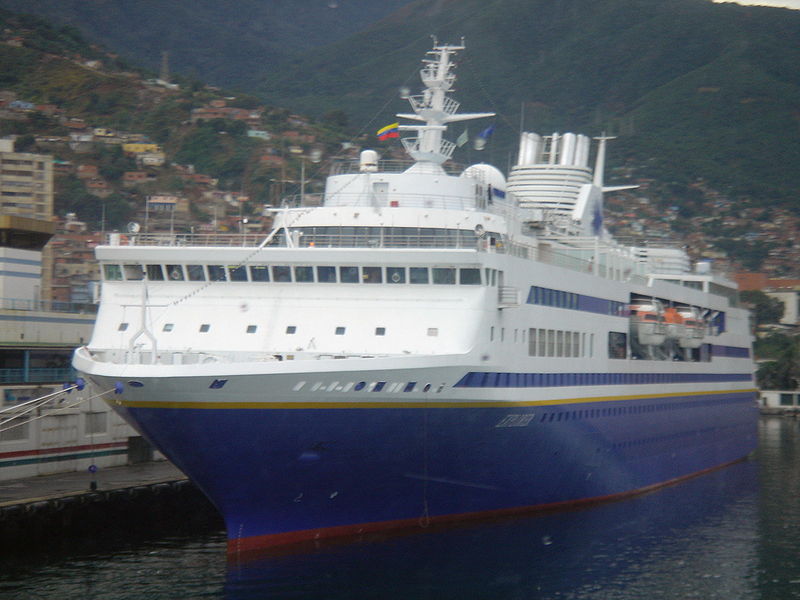
The MV Explorer

The MV Explorer accommodates over 2,000 students each year. SAS calls it their personal “floating university.” We study while we’re being transported from country to country and, while we’re in port, we have the opportunity to explore by either going on SAS-sponsored trips or finding new things to do on our own.

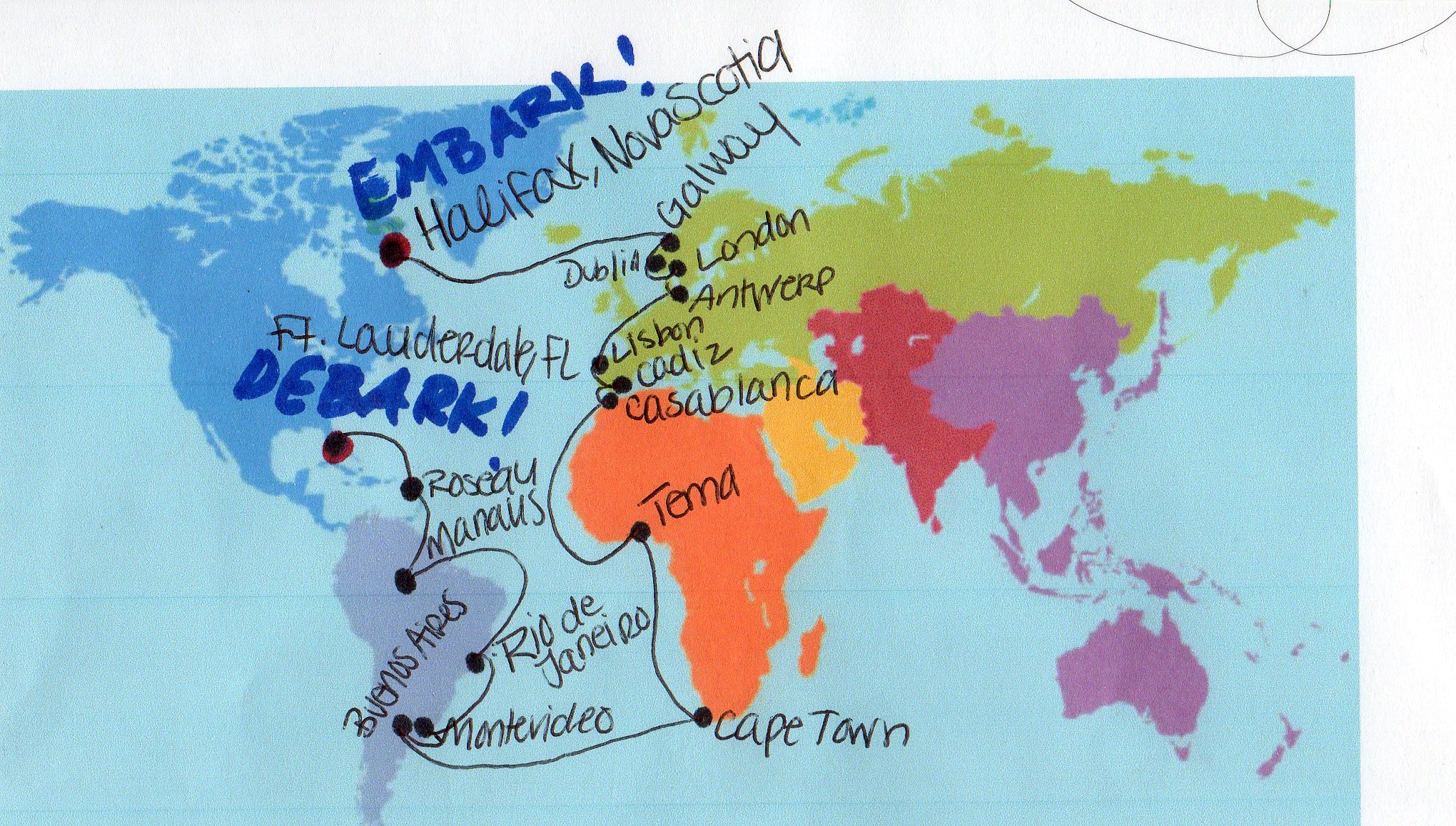
For the 111th Semester at Sea trip, this is the first time that they are using this particular route.

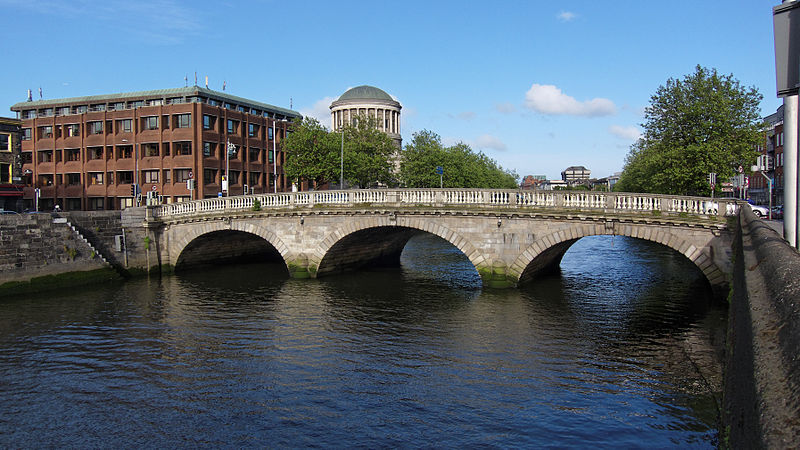
The Father Matthew Bridge in Dublin, Ireland

Soon enough, I’ll be docking in Tema, Ghana and assisting SAS alumnus deliver toothbrushes to the Freedom Center. In London, I’ll be spending 3 days with Milly, a foreign exchange student that spent a year at John Carroll. Hopefully, I’ll get the chance to check out some classic Irish pubs in Dublin and witness the breathtaking landscapes that I saw in a book my mom bought me when I was little. Since we’re allowed to travel from Antwerp, Belgium, I get to see Anna, another foreign exchange student, in Germany. I’m looking forward to making friends and going on crazy adventures together which might include trying some local cuisine like Brazilian churrasco (chicken hearts)…if we don’t get too intimidated.

Aside from planning trips, sending out my passport to get visas for Ghana and Brazil, booking my flights, and buying books, I had to visit the traveler’s clinic to get my yellow fever vaccination.

One of my best friends, Jaclyn, came with me for moral support. I was glad she was there when they handed me a side effects list that included “death,” “severe brain damage,” and “organ failure.” Once my initial freak out had passed, we walked into the consultation room where I received the vaccination. The doctor began playing an informational video while she snuck around to her Wonder Woman lunchbox to get the loaded needle. Having survived that, maybe now I’ll have the courage to cage dive with sharks in South Africa.

For 107 days, I get to be cruising on the coolest campus in the world. As the SAS employees say – the world will be my campus!

*More information can be found at semesteratsea.org

~Rebecca~

This is an international program meaning SAS accepts students from around the world! There’s a special Facebook group for every voyage, so I took a look at the colleges everyone attended. In case you’re interested, here are a small portion of the schools that accept Semester at Sea credit:

University of Virginia (Academic Sponsor of Semester at Sea)
John Carroll University
The Ohio State University
Case Western Reserve University
Baldwin Wallace University
Kent State University
St. Mary’s College of California
University of San Diego
University of South Carolina
Stanford University
Southern Methodist University
University of Alaska Fairbanks
University of Colorado
Tufts University
University of New Hampshire
Vanderbilt University
Elon University
Lawrence University
Rollins CollegeCurry College
Western Kentucky University
Bentley University
New York University
Rutgers University
Wheelock College
Loyola University Chicago
Elizabethtown College

Smoothies_2-1

Beet Week Day 7 – A Smooth Finish

Your Heart Might Skip a Beet – Beet Smoothies

We are all guilty of over-extending ourselves at times, but just because you’re busy doesn’t mean you shouldn’t eat healthily. Some of the best “on the go” snacks are high in nutrients. For someone like me that loves fresh fruit, smoothies are the perfect snack to grab on my way out the door.

Prep time for smoothies is pretty minimal (5 minutes tops!) You can use a blender or food processor to combine all of your ingredients together into one delicious drink.

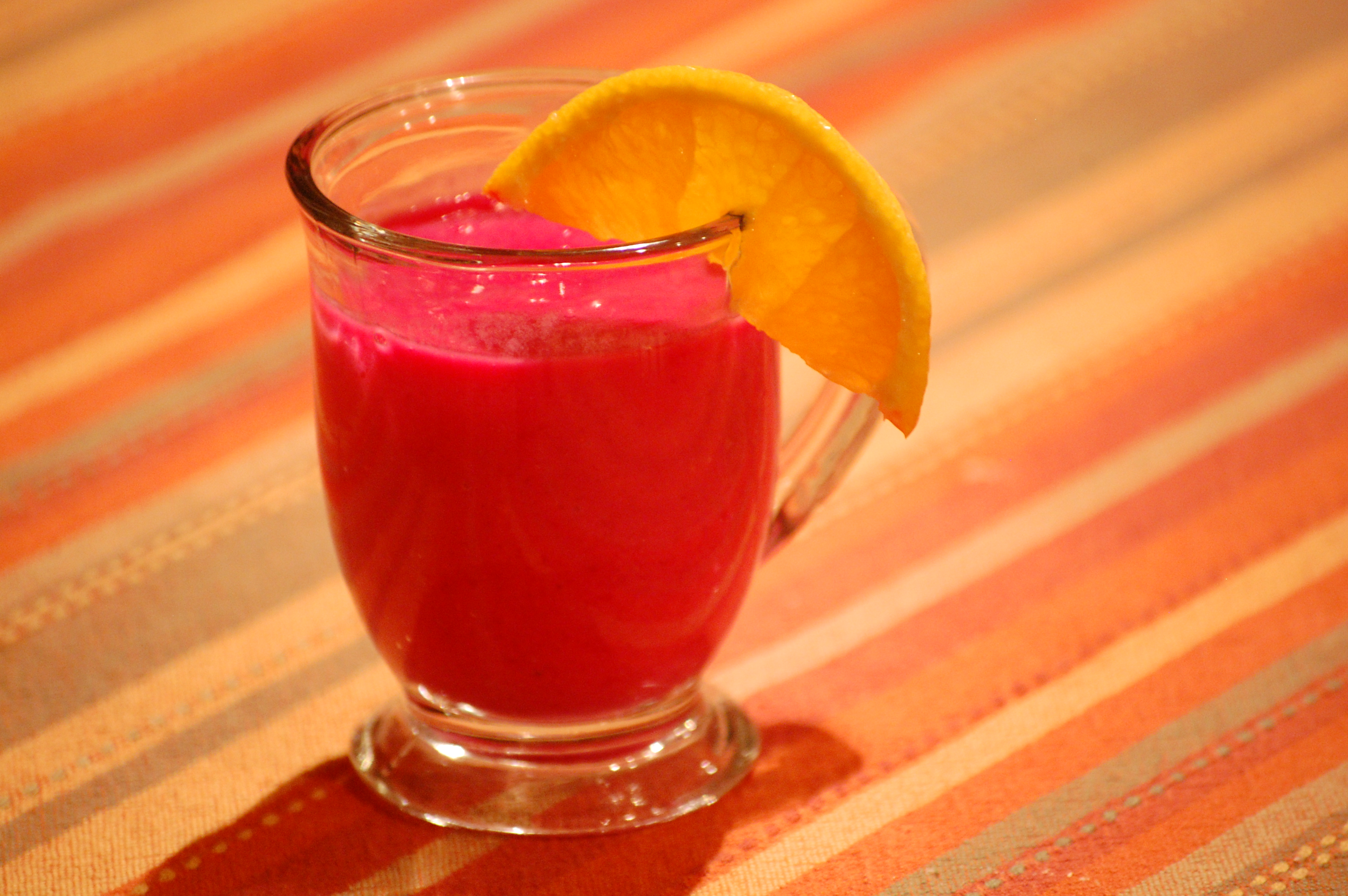
For my smoothie, I used:

½ raw beet

½ banana

½ orange

¼ apple

1 tsp honey

6 oz. yogurt

This makes 1-2 servings depending on the size of your glass. To be honest, I was shocked at how good it tasted. I coaxed my grandma into trying it too and she loved it!

You can use any combination of the ingredients above and you can substitute a non-dairy product or even ice cubes for the yogurt.   Smoothies are forgiving and can be tweaked until they taste just right. The beets not only add a bright pop of color, but a surprisingly satisfying sweetness.  What a great way to start or end your day!

~Rebecca~

DSC_0846

Beet Week Day 6 – Seeing Red

Working with beets, it doesn’t take long to realize the opportunity for color. We’ve already produced hot pink cupcakes, deep purple salads, orange hued stews, all the while seeing red – everywhere; hands, counter tops, sinks, pans…

Rebecca Under the Influence of the Beet

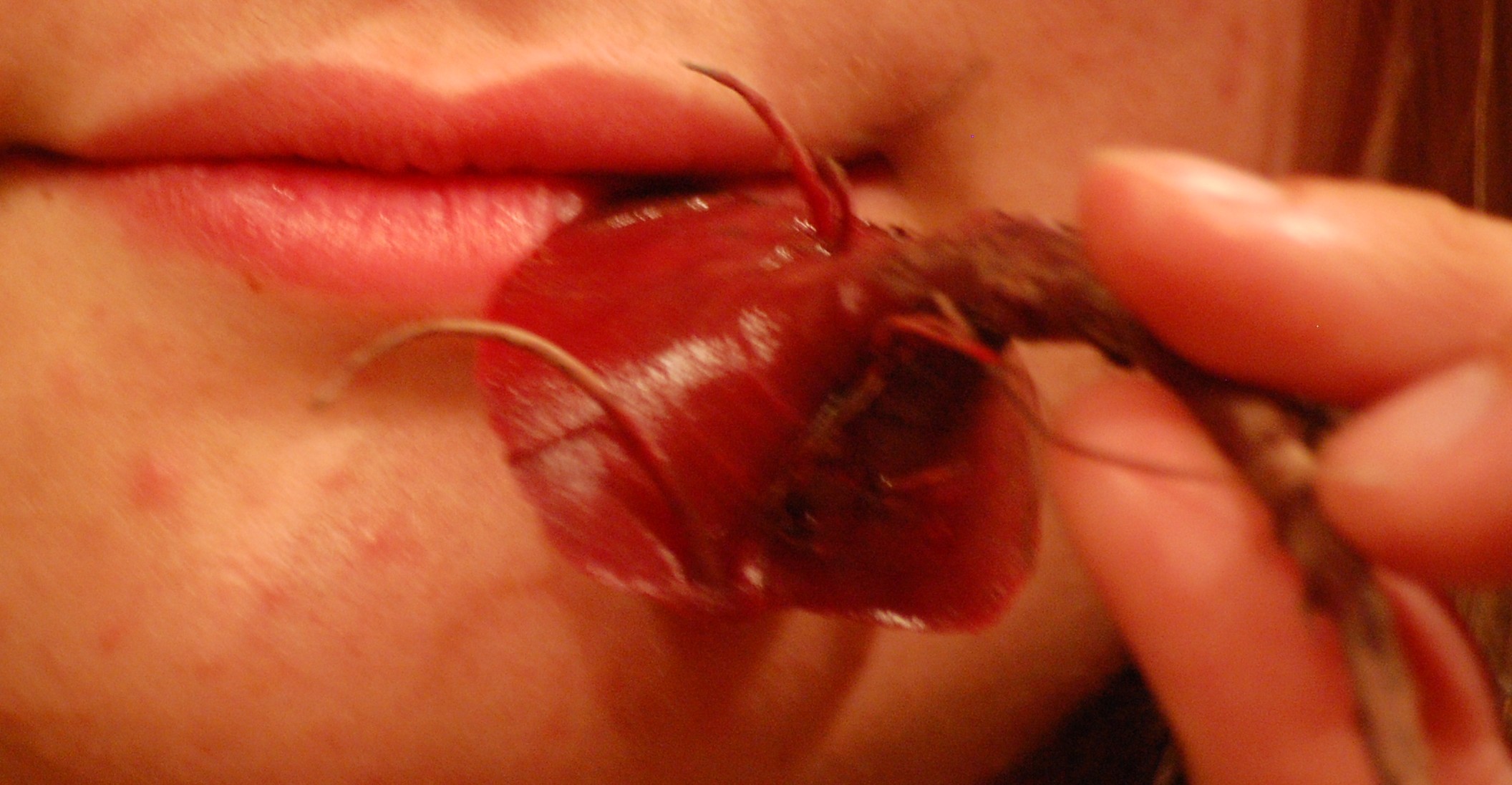
So why not try it as a makeup?  Red beets provide a green alternative to the usual chemical dies found in commercial products and  can be unbelievably simple to apply.  For a light pink to deeper red lip stain, simply rub a raw slice of beet across your lips.  The color is safe and healthy and will last for several hours.

Want to create a more traditional lip gloss?  Simply mix beet juice with a small amount of olive oil and a touch of powdered sugar to thicken the mixture.  Other “recipes” call for melted beeswax and a mixture of castor oil and sesame oil all whipped together before introducing the beet juice. This recipe can be put in a container and used over time.

Beautiful, practical, healthy, easy and affordable.  Oh – and of course – tasty!  Get ready to kiss your old lipstick good bye!

The Otherworldly Beet


AxfIDmdCAAAeFEG-300x199

Beet Week Day 5 – Let’s Spice it Up

хрін (khrin)

In Ukraine, this spicy sweet condiment or salad called khrin (хрін) is a traditional Easter dish, but it is known and used throughout the world under a variety of names and for a variety of purposes.   In the US, it is commonly referred to as Red <Beet> Horseradish and its bright pink color makes it an interesting addition to more typical condiments.

Ingredients

  • 2-4 stalks of fresh horseradish, grated
  • 1-2 raw beets, peeled and grated

Procedure

  • Peel and grate raw beets. Let them sit for a little while and then squeeze the juice out.
  • Grate the horseradish and put into a bowl (note: the grating of the horseradish releases an enzyme that creates its spiciness.  As the grated horseradish sits,  it will become spicier – to a point – however if left too long, it will lose that pungent flavor and become bitter).
  • Add the beet juice to the horseradish and mix (note: adding the beet juice counteracts the enzyme and stops the spiciness from perpetuating.  Additionally, the beets add a sweet flavor which further mellows the horseradish)

Khrin is a delicious accompaniment to any sort of cooked or cured meat.

On that spicy note – Happy adventures in Ukrainian cooking-with-beets! Leave a comment if you have other favorite beet-related or Ukrainian recipes.

Смачного (smachnoho)!  ~Tammela~

Other names this (or a similar horseradish) dish is known by:

Central and Eastern Europe – khreyn or keen.

Poland  – ofchrzan

Czech Republic – křen 

Lithuania – krienai

Russia – хренkhren 

Hungary - torma

Romania – hrean

Bulgaria – хрян,khryan

 Slovakia – chren


Beet_Week_9

Beet Week Day 4 – Cupcakes

If You Can’t Stand the Beet, Get Out of the Kitchen

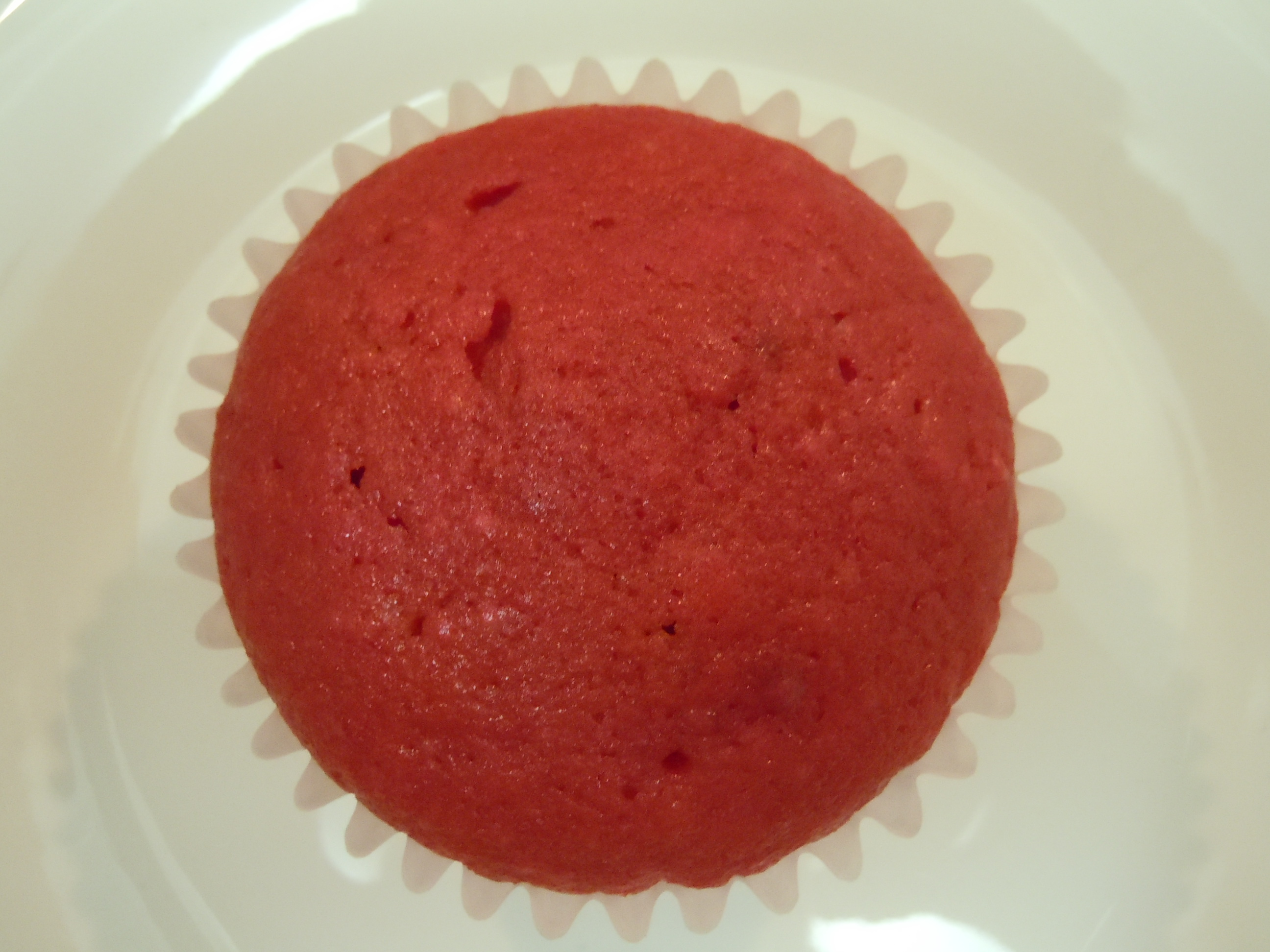
I know what you’re thinking…beet cupcakes?! Sounds pretty crazy, huh? For a beet hater like myself, I’ll openly admit to my skepticism. To me, beets are sickeningly sweet, but when they’re baked into pretty little treats, they can actually taste amazing!

You’ve probably passed beets in the supermarket without giving them the time of day and I can’t really blame you, but what you might not know is that beets are actually an incredibly healthy food – super foods in their own right. Joining garlic, green tea and flaxseed, beets can help prevent cancer. They have no trans fat, no saturated fat, are low in calories, and are a great source of iron.

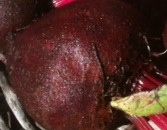
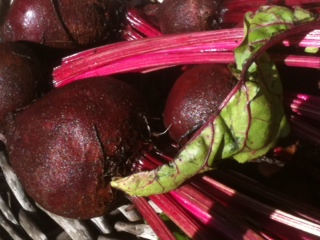
The perfect beet is hard to come by; it should be deep red with roots extending from the bulb. Crisp greens are also a good indicator that your beets are fresh. You’re going to cut these off for your cupcakes (trust me, I tried it, they’re disgusting in cupcake batter and frosting batter.)

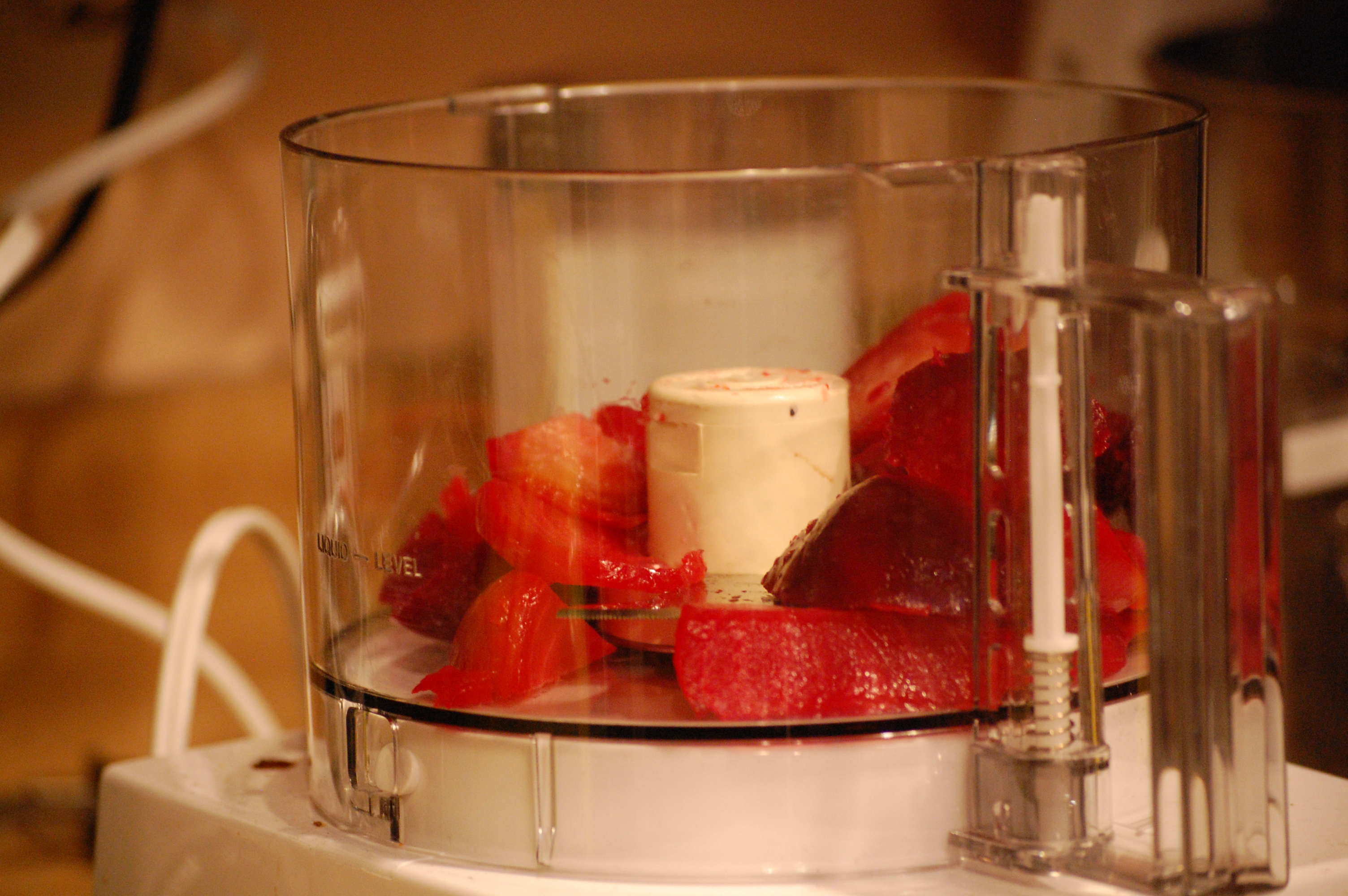
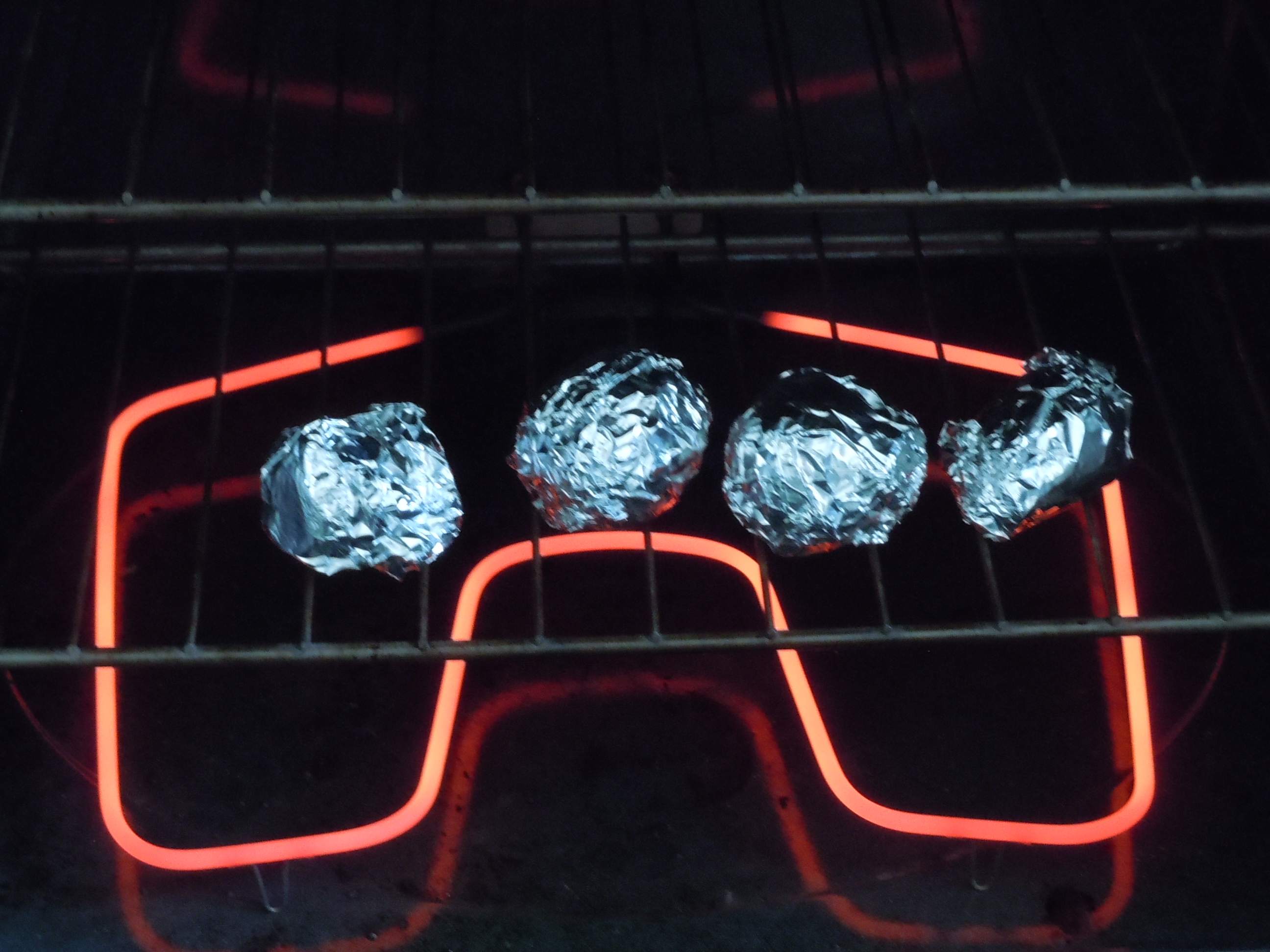
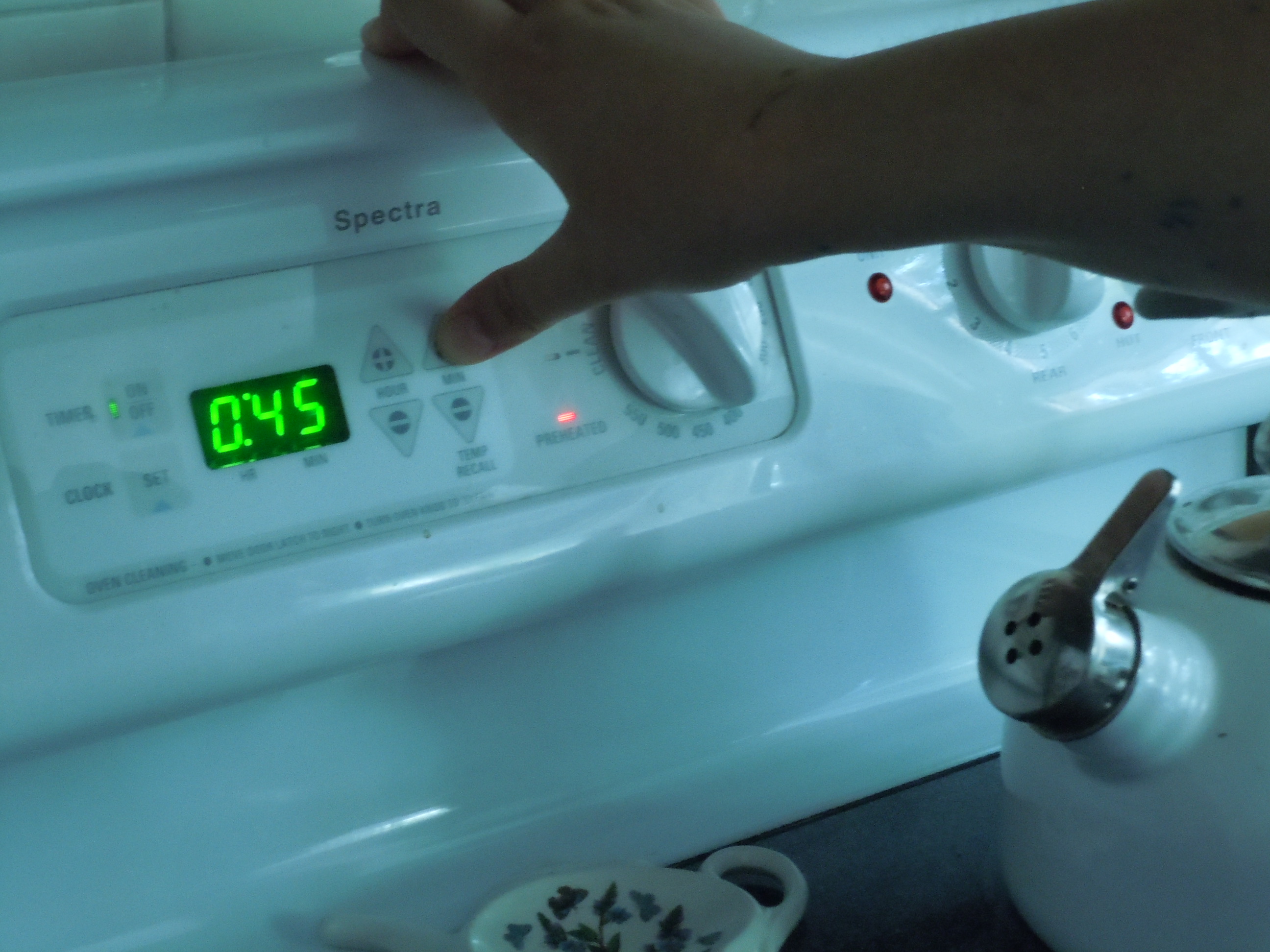
Follow the steps to make beet puree  from the beet margarita recipe (Beet Week Day 3). In a nutshell, you’ll be roasting 3-4 beets wrapped in foil at 400 degrees for about 45 minutes. Unwrap, run under cold water and peel the skins off…they come off extremely easily.

Cut the beets into quarters (maybe smaller depending on the size of your beets), and put them in the food processor or blender.

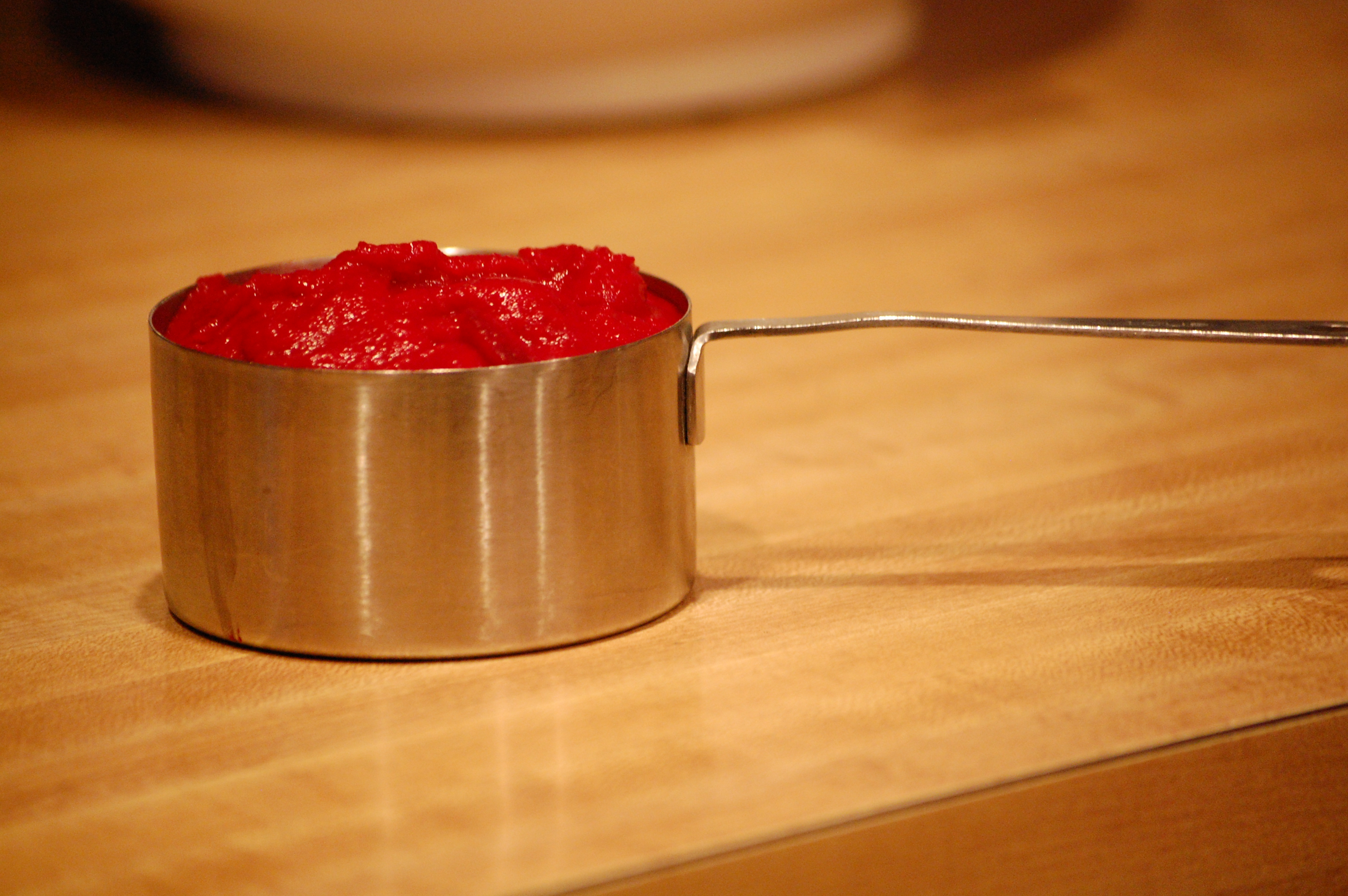
3-4 beets will yield about a cup of beet puree. Set this aside.

Here’s your Beet Cupcake Recipe:

½ C Sugar

1 ½ C Flour

2 tsp Baking Powder

½ C Butter (1 stick)
2 eggs

½ C Milk

2 tsp Vanilla

1 C Beet Puree

Depending on how big your cupcake pan is, this recipe creates about 12 cupcakes.

First, combine the dry ingredients in a bowl (sugar, flour, baking powder). Cream the butter in a mixer; if you don’t have access to a mixer, soften the butter in the microwave for 10 seconds and use a spoon to soften it up for your cake batter.

Whisk your eggs in a separate bowl and add the milk and vanilla to it. Slowly add the dry mix to the wet mix and stir continually.

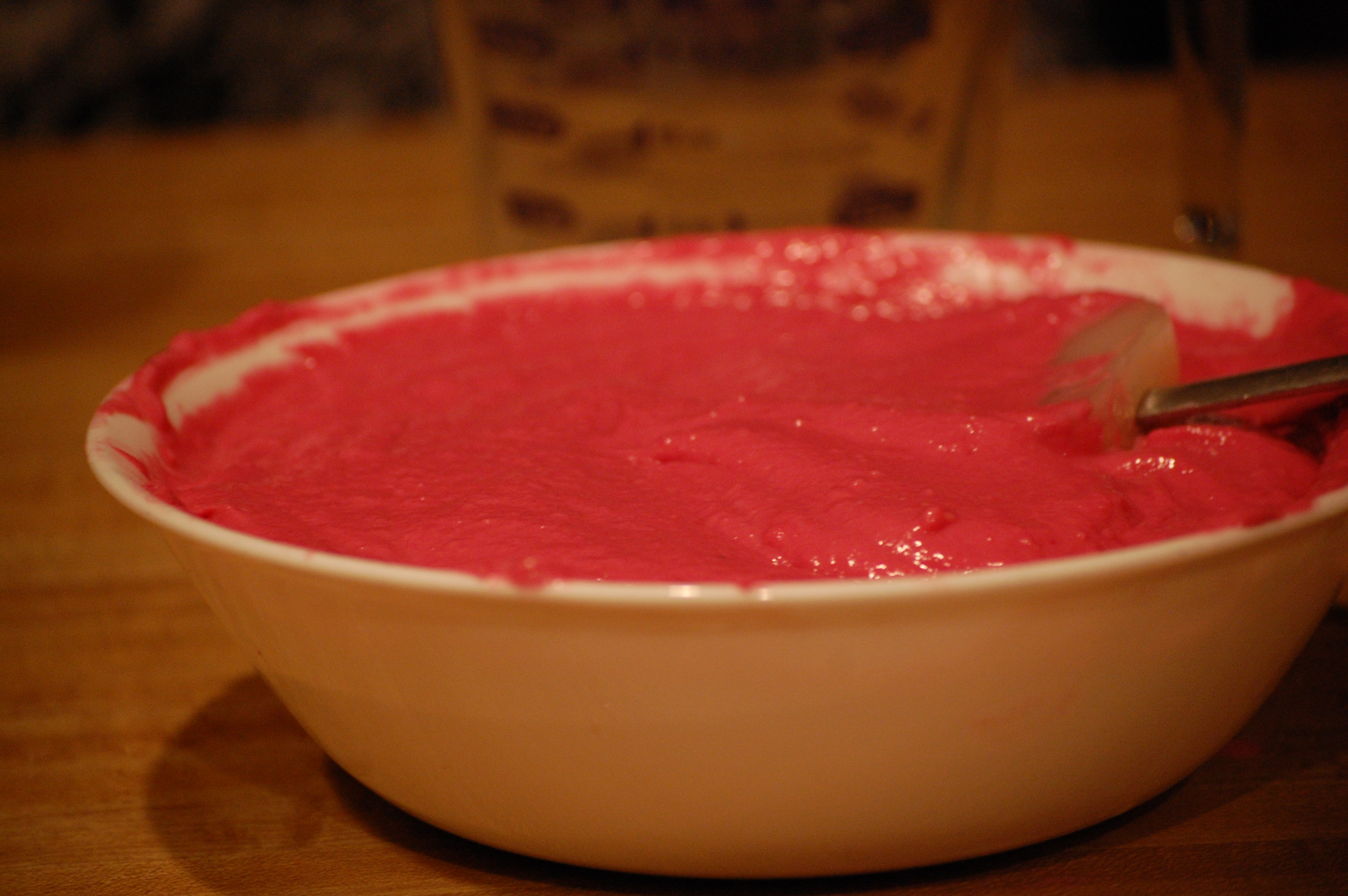
Once your batter is nice and creamy, fold (mix) in the beet puree.

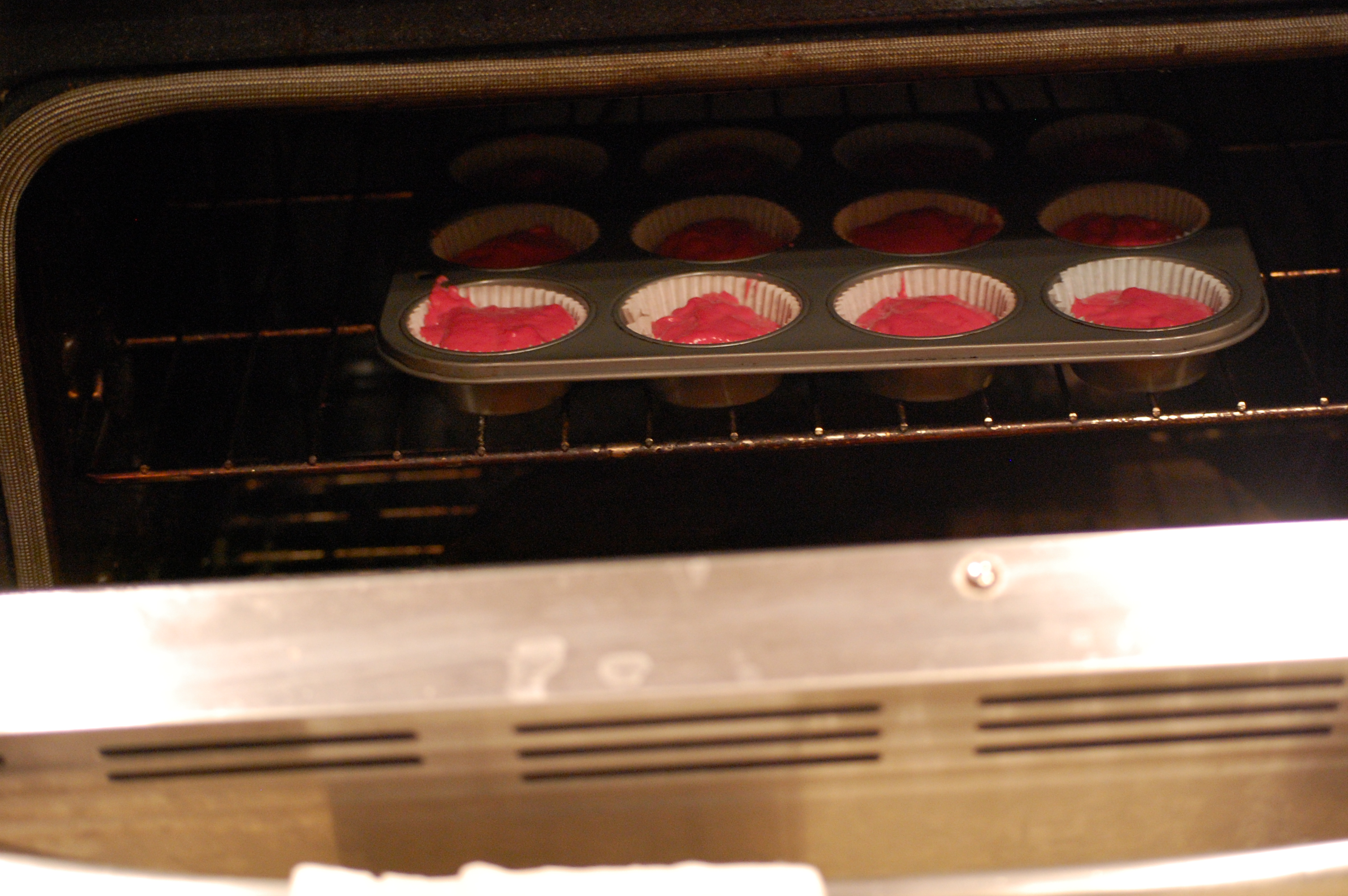
Use a ladle or spoon to portion your batter into your cupcake pan and bake at 350 for 25 minutes.

And remember, a cupcake is nothing without frosting.

Vanilla Cream Cheese Frosting recipe:

½ C Butter (1 stick)

8 oz Cream Cheese (1 package)

1 C Powdered Sugar

2 tsp Vanilla

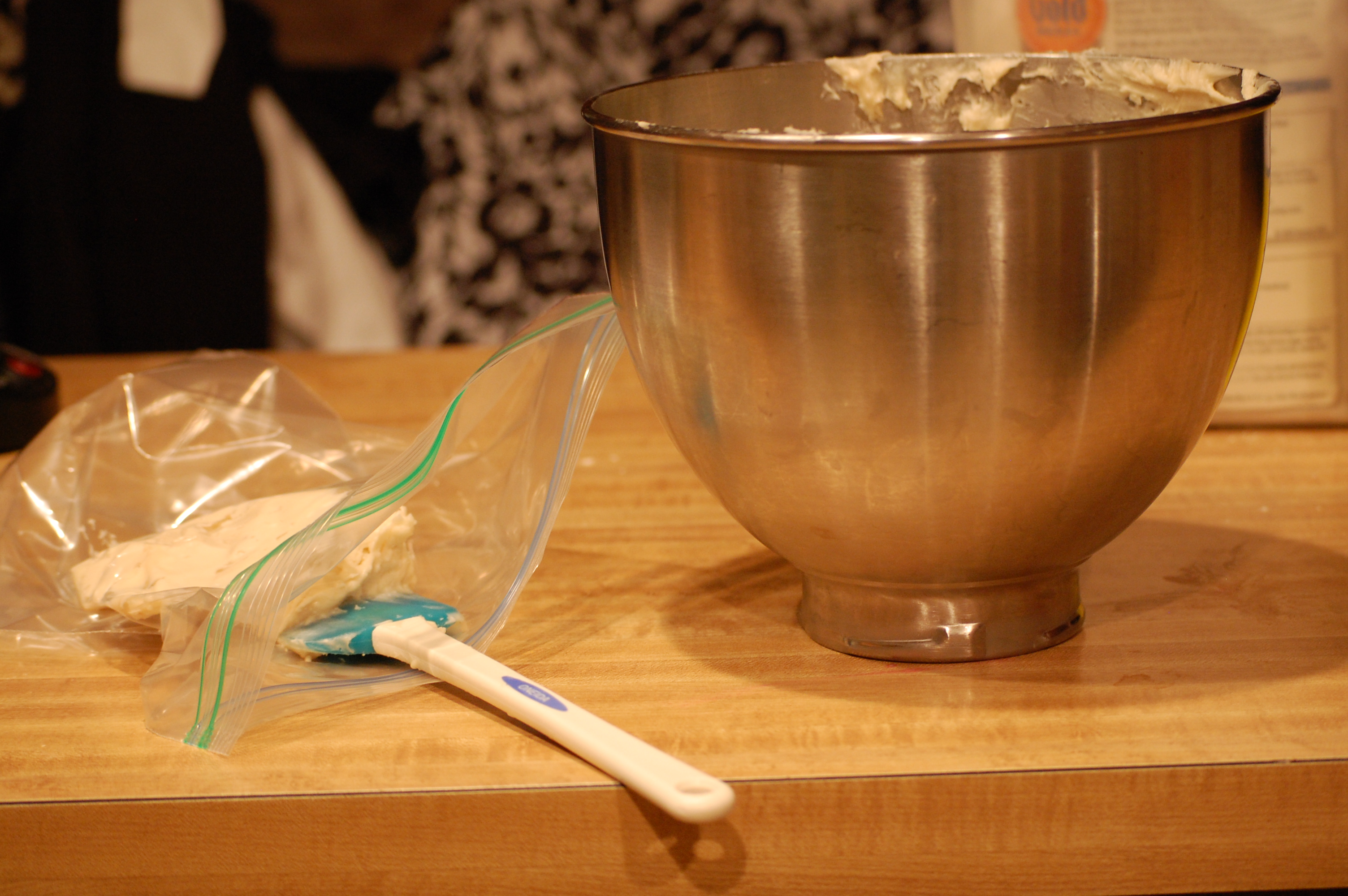
Cream the butter and cream cheese together in a mixer until malleable. Add the powdered sugar in SLOWLY; you don’t want it to splash back in your face. Finally, add in the vanilla and let the mixer go for 30 seconds or so. It sometimes helps if you take a rubber spatula and scrape down the sides so all of the deliciousness is contained.

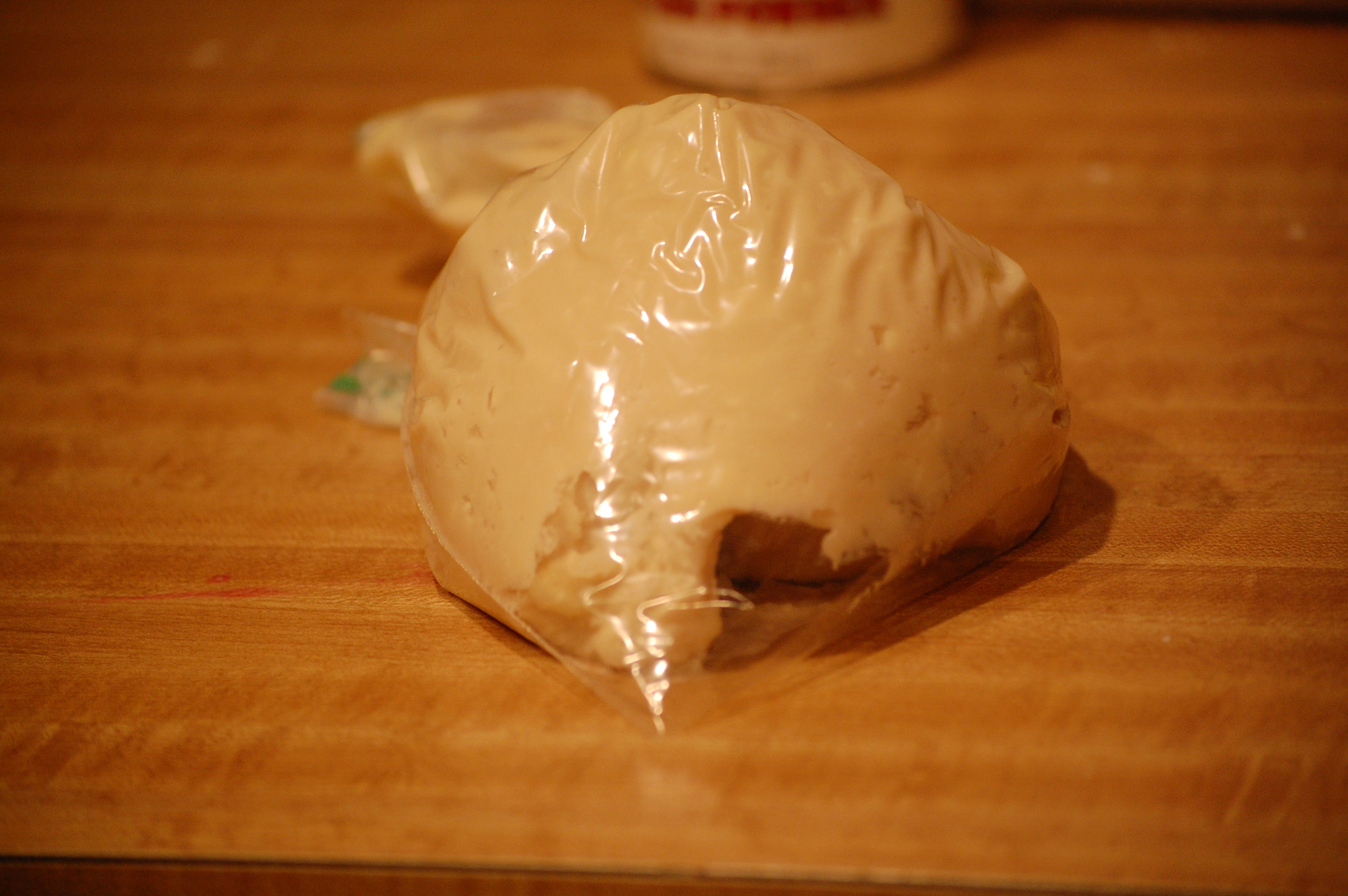
I realize not everyone has pastry bags to pipe out their frosting (I’m lucky; my mom’s a chef!) Be resourceful though…plastic freezer bags can act as pastry bags. Put the icing in the bag using a rubber spatula.

Zip the plastic bag shut and squeeze the frosting down to one end. Hold the bag in a diamond shape so one of the tips is pointing down like this:

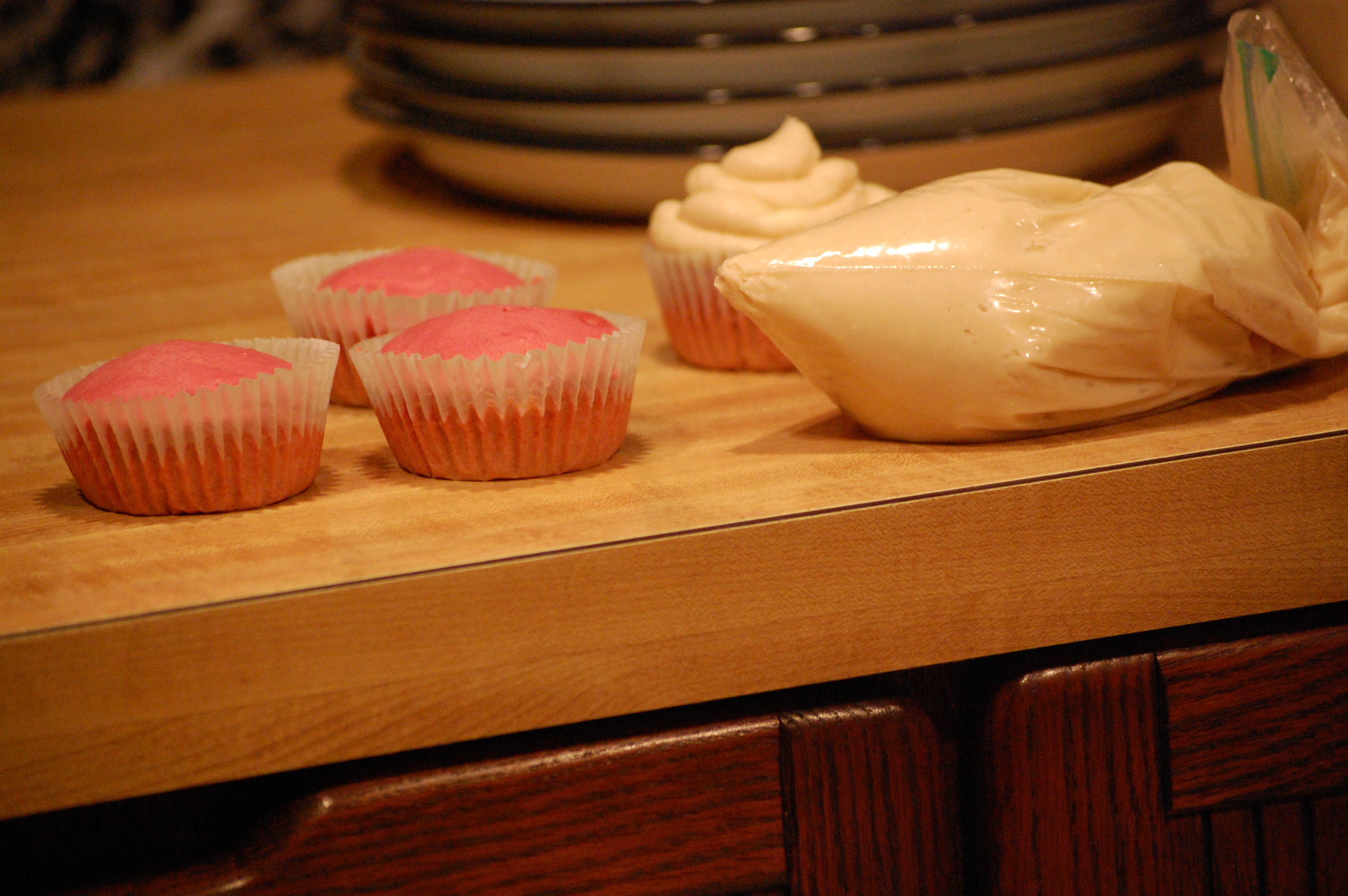
…and snip the tip off! Once your cupcakes are cooled, you can make them look pretty.

I bought all of my beets from local farmer’s markets. You might have one near you too! If you’ve never been to a farmer’s market, it’s a really cool place where you can buy fresh fruit, vegetables, and other goods to support your local farms.  As an added bonus, the  produce is usually much cheaper and fresher at farmer’s markets.  In Cleveland, (as in other places – see below* for a sampling) you can find them listed on one site: localfoodcleveland.org.

Enjoy your beet cupcakes! Please comment with pictures of your own cupcakes or other beet concoctions (:

-Rebecca-

*Many states, regions and cities have sites listing farmers markets- here are a few examples.

California

New York City

Chicago

Denver

Minneapolis/St. Paul


ps – during our experimentation with different recipes, we also tried these cupcakes with a canned chocolate frosting.  We found this to be a respectable (and tasty) alternative.

photo-55

Beet Week Day 3 – Happy Hour

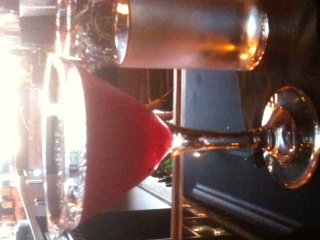
BEET MARGARITA – SO WORTH A TRY!

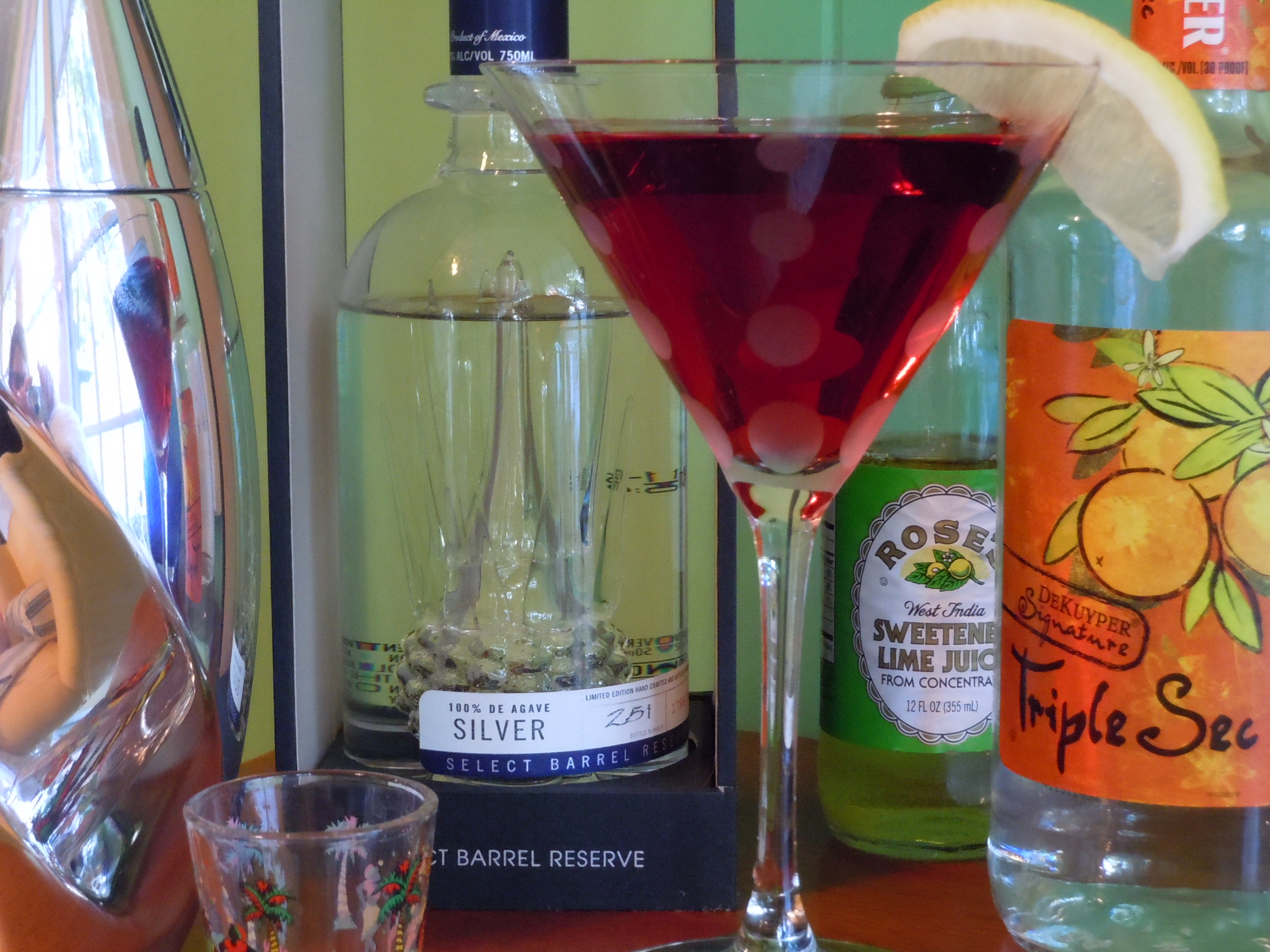
We first discovered this margarita at Light Bistro  in the trendy Ohio City  in Cleveland, Ohio.  There were two of us – one a beet lover and one – well – not so much.  The consensus?  DELICIOUS!  Sweet and Tangy and smooth as could be.  This could be a game changer for folks who’ve always hated beets.

Beet Margarita Recipe

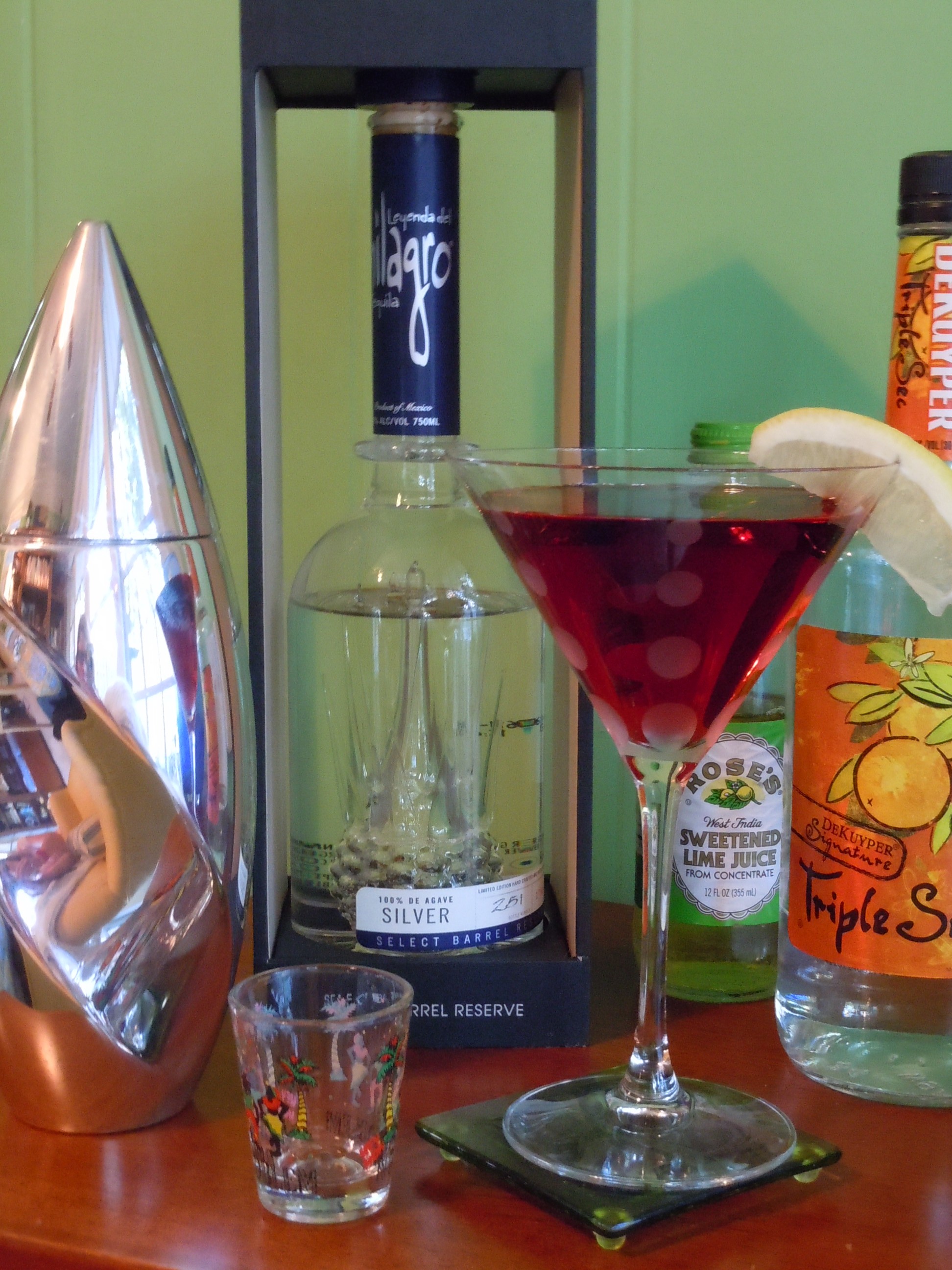
1.5 oz Tequilla (they used Jose Cuervo – but we love Leyenda del Milagro Select Barrel Reserve Silver)

.5 oz Triple Sec

1 oz Roses Lime Juice

.5 oz Lemon Juice (increase/decrease lime and lemon juice to taste)

.5 oz Roasted Beet Puree (see recipe below)

Mix ingredients in a shaker with ice and pour directly into a martini glass.

Note:  Other recipes call for orange juice, cilantro syrup, muddled oranges and agave nectar.  Some use a salted rim and some a sugared rim.  Some serve the margarita in a traditional glass over ice.   Be brave – be bold – be beetiful!

Roasted Beet Puree

Preaheat oven to 400 degrees

Using Fresh Beets:

Remove greens (cut them off close to the beet)

Wash beets to remove any loose dirt

Wrap each beet in foil and place in 400 degree oven

Cook beets for 45 minutes

Remove the foil wrapped beets and let them cool to the touch by running them under cold water.  Skin should peel off easily.

Discard skins and use a food processor or blender to puree the beets (as smooth as you can get them).

If you are adverse to beets, be sure to use cheese cloth or a chinois strainer to drain juice and avoid beet particles in your cocktail.  If you’re a beet lover, you might enjoy the little bit of thickness from the puree, especially if you are pouring your margarita over ice.

Follow recipe above and mix, pour and drink.  BEETlicious!


379475_612614224064_2140666440_n

Beet Week – Day 2 “Salat” Recipes

The BEET goes on in Tammela’s Ukraine kitchen…

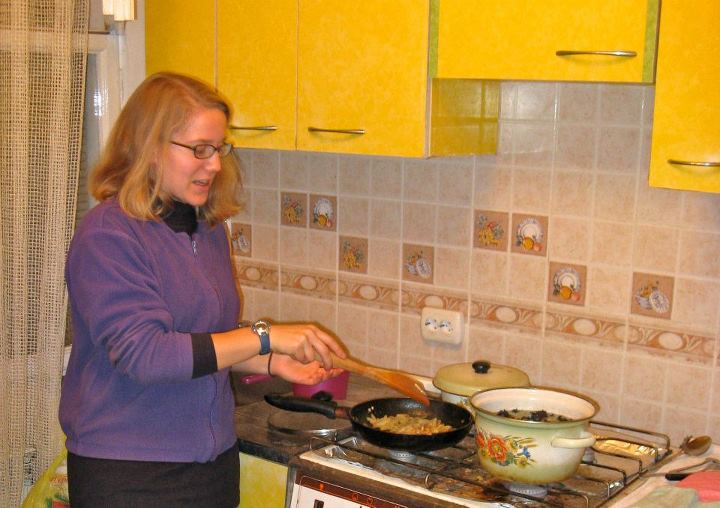
As you all may know by now, I’ve been living in Ukraine as a Peace Corps Volunteer since September 2010 and thus have had plenty of time to taste – and sometimes cook – many traditional Ukrainian dishes. A lot of these dishes include the staple (mainly root) vegetables that grow so easily and abundantly here in eastern Europe: potatoes, carrots, onions, cabbage, and beets. It is amazing how many different combinations and variations one can create from just these five vegetables.

Most people are quite familiar and comfortable with cooking and eating potatoes, carrots, onions and even cabbage. But I have found that beets challenge and puzzle many cooks. They are a funny shape, have a thicker skin than potatoes or carrots, and are (usually) a deep red-purple color that stains almost everything it touches.

How the heck does one cook and eat a beet?

That is what I am here to tell you!

I developed a passion for beets several summers ago while shopping at farmer’s markets in the States. That first summer I experimented with beet preparation: I roasted, boiled, and sautéed beets, sometimes alone and sometimes with other root vegetables. Some dishes turned out well and some failed. Living in Ukraine for the past year and a half has expanded my how-to-prepare-beets horizons.  Following your introduction to Borscht, I shall now introduce you to some other classic Ukrainian dishes that feature beets.

These beet-sporting Ukrainian dishes, which are often made for holiday meals but are equally as good for regular consumption include salat vinehret (салат вінегрет), one of my favorite salads; and salat shuba (салат шуба; shuba means “fur coat”), which is a bit of an acquired taste.

Hope you enjoy!

Tammela

 салат вінегрет (salat vinehret) 

The vegetable proportions are generally about equal, but feel free to add more or less of anything, to your taste.

Ingredients

  • 1-3 small-medium potatoes, peeled
  • 1-2 medium beets
  • 1-2 medium carrots
  • 1-2 medium dill pickles (preferable homemade ones), diced
  • 1 medium onion, diced
  • Oil, to taste
  • Salt and pepper, to taste

Procedure

  • Boil whole potatoes, beets, and carrots until cooked through. The beets will take the longest to cook – 45-60 minutes – so put them in first.
  • Meanwhile, dice the pickles and onion and put them in a big bowl.
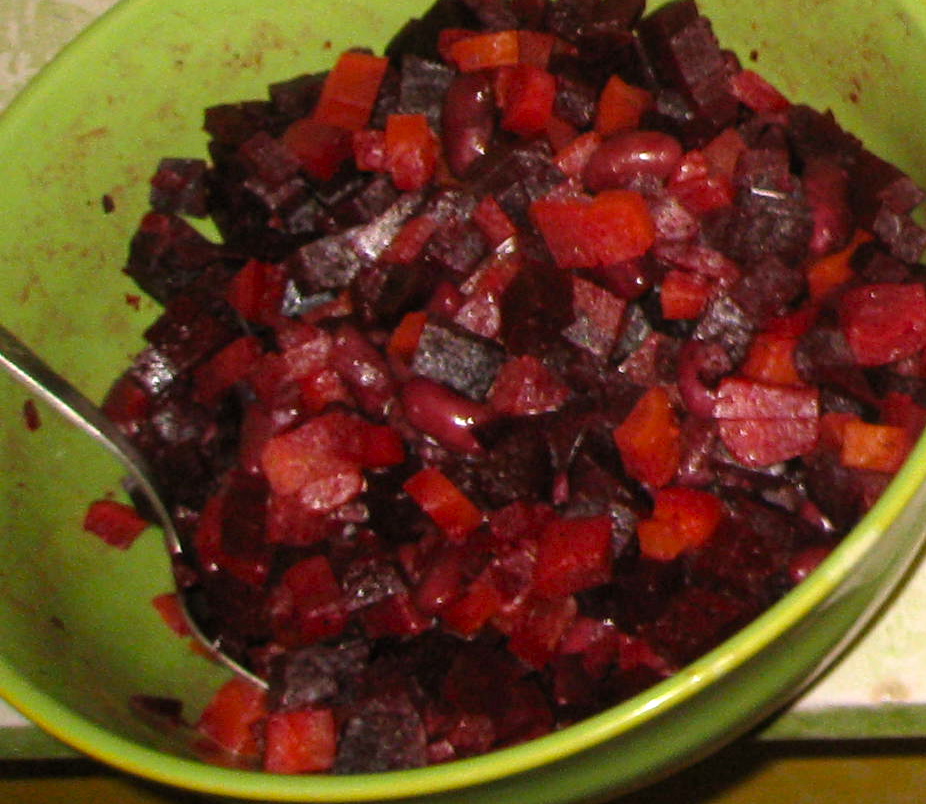
  • When the root vegetables are cooked, peel the beets and carrots and let cool. When they are cool enough, dice the potatoes, beets, and carrots.
  • Add diced root vegetables to the bowl and season with your preferred amount of oil, salt, and pepper. Mix, and enjoy!


салат шуба (salat shuba)

If you are a mayonnaise lover, you can add it in between every layer. But if you’re like me and are slightly mayo-averse, feel free to only add it to the top layer.

Ingredients

  • 1-3 small-medium potatoes, peeled
  • 1-2 medium beets
  • 1-3 medium carrots
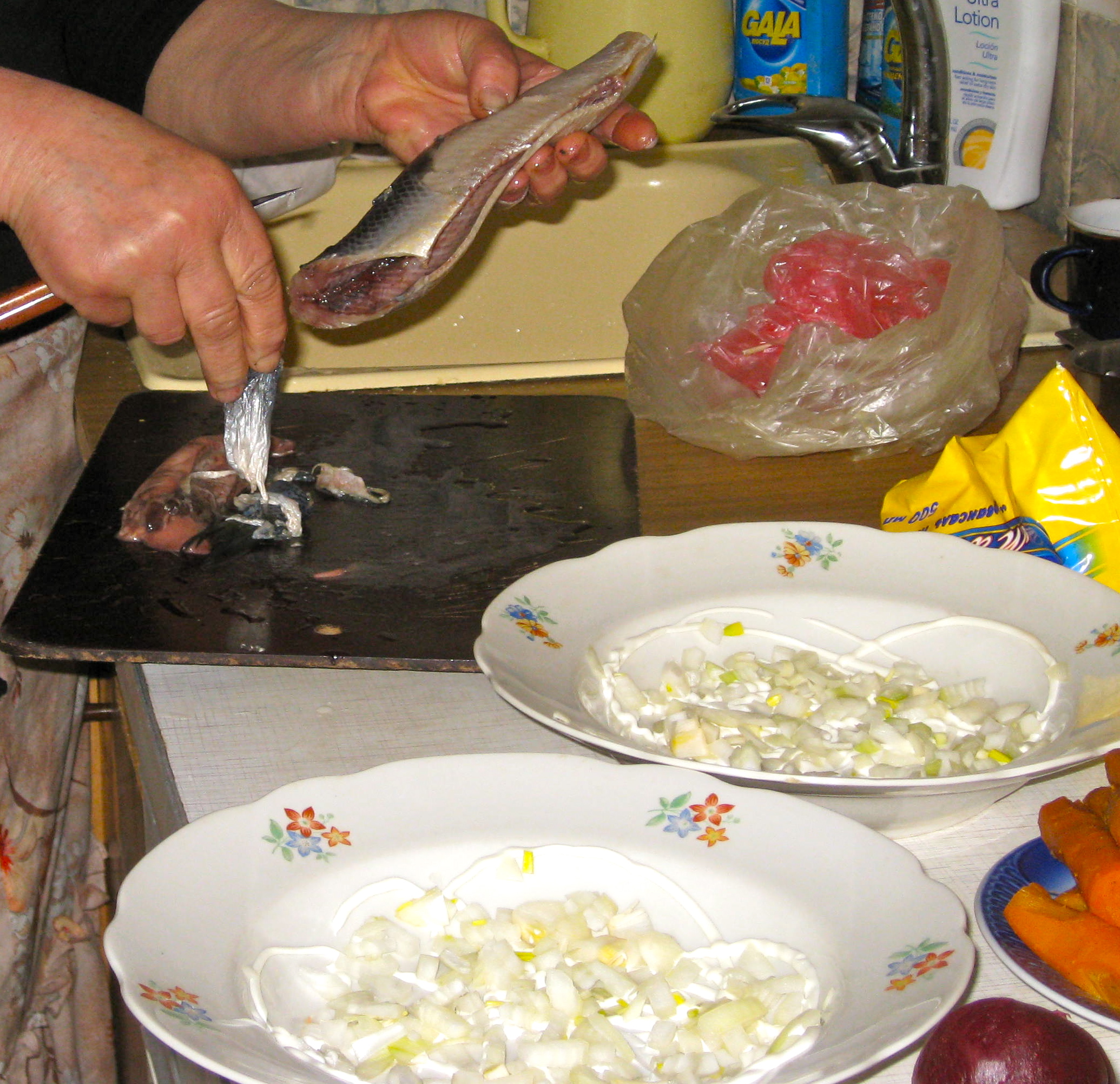
  • 1-2 cups pickled herring, diced
  • Mayonnaise, to taste

Procedure

  • Boil whole potatoes, beets, and carrots until cooked through. The beets will take the longest to cook – 45-60 minutes – so put them in first.
  • Meanwhile, dice the herring and spread it out on a large shallow platter.
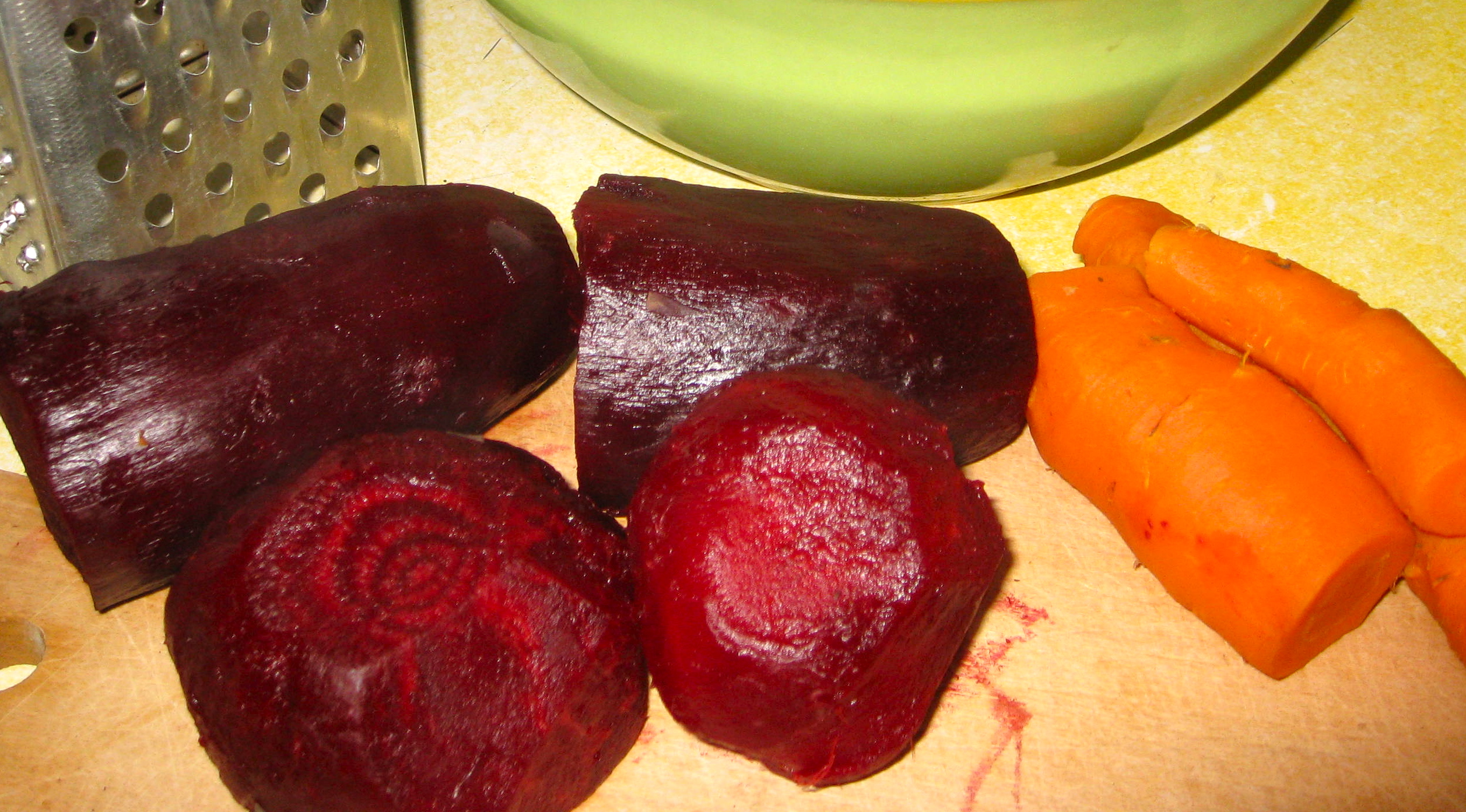
  • When the root vegetables are cooked, peel the beets and carrots and let cool. When they are cool enough, grate the potatoes, beets, and carrots but keep them separate.
  • Spread the grated potatoes over the herring, smoothing them into a nice, flat layer.
  • Spread the grated carrots over the potato layer.
  • Spread the grated beets on top of the carrots. Add a couple of tablespoons of mayonnaise and spread it around evenly, letting it mix a little with the beets.
  • This salad looks beautiful when served in clean-cut slices that reveal the colorful layers.
800px-Flag_of_Ukraine-1.svg

Beet Week – Day 1 Ukrainian Style

Adventures in Ukrainian Cuisine: Beets

I have been living in Ukraine as a Peace Corps Volunteer since September 2010 and thus have had plenty of time to taste – and sometimes cook – many traditional Ukrainian dishes. A lot of these dishes include the staple (mainly root) vegetables that grow so easily and abundantly here in eastern Europe: potatoes, carrots, onions, cabbage, and beets.

I have found that beets are the biggest challenge. They are a funny shape, have a thicker skin than potatoes or carrots, and are (usually) a deep red-purple color that stains almost everything it touches. Living in Ukraine for the past year and a half has expanded my how-to-prepare-beets horizons.

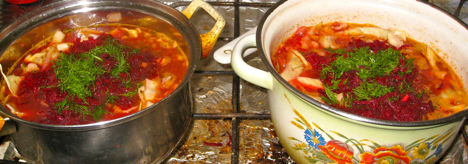
Even if you know nothing about Ukraine or eastern Europe, you have probably heard of borscht, beet soup (or stew, as I prefer less water-to-vegetables ratio). Borscht is healthy, offering many nutrients and antioxidants and protein in its meat and/or beans.

There are two main kinds of borscht: green borscht and red borscht. As far as I can tell, the main difference between the two is the green borscht’s lack of beets and slightly different ingredient set (additions to green borscht include preserved young cabbage, dill, and hard-boiled egg). Red borscht is what probably comes to mind when a non-Eastern European thinks of borscht: that rich, reddish-purple soup set off by a dollop of bright white sour cream.

It’s important to note that every borscht is different. Every Ukrainian has her own recipe and it rarely turns out the same twice. Borscht gets better with age; third-day reheated borscht is, by far, the tastiest.

Український Борщ (Ukrainian Borscht), Tammela’s Version

Ingredients:

  • Meat of choice (I used two chicken drumsticks), or beans, or no protein at all
  • 2 medium onions, sliced thinly
  • 3-4 small-medium potatoes, peeled and diced
  • 1 large carrot, peeled and grated
  • 1 large or 2 small-medium beets, peeled and grated
  • 1-2 small-medium tomatoes, grated or chopped
  • 1-2 tbsp tomato paste (depending on how tomatoey you want your borscht to be)
  • ½ head of green cabbage, sliced thinly
  • Oil (Ukrainians use sunflower oil, but canola/vegetable oil would work fine)
  • Salt and pepper, to taste
  • Fresh dill, chopped
  • Optional: bunch of green onions, chopped
  • For serving: dollop of sour cream; hunk of brown bread; peeled raw garlic clove(s)

Procedure:

  • Bring water with meat to a boil, and simmer until it’s mostly cooked (cooking time will depend on the kind of meat you use; chicken cooks fast)Partway through, add the sliced onion to the water.
  • When meat is mostly cooked, add diced potatoes and keep simmering until potatoes are cooked, 10-20 minutes.
  • Meanwhile, grate the carrot, beet, and tomato, and sauté for a few minutes in a pan with some oil.
  • Add sautéed vegetables to the pot and throw in the cabbage, too.
  • Salt and pepper to taste, stir in some tomato paste, add the dill and/or green onions, and let simmer for as long as you like.
  • Serve borscht with a dollop of sour cream (сметана, smetana), a hunk of brown bread (чорний хліб, chornyy khlib), and (if you’re really brave) a clove or two of peeled raw garlic.

If you are not up for trying your hand at borscht, there are a few other beet-sporting Ukrainian dishes, which are often made for holiday meals but are equally as good for regular consumption.  You can check them out here over the next few days as BEET WEEK continues!

~Tammela~

Ready for more delightful beet recipes from the Ukraine?  Click here

IMG_20110902_132154

Road Trip West: The Wildfire (Part 4 of 4)

(Part 4 in a 4 part series)-


WILDFIRE!!!

By Megan Ritchie

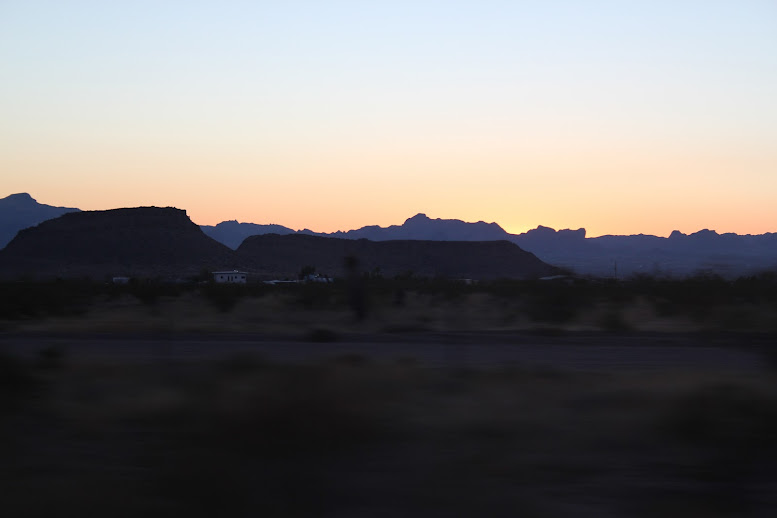
…continuing on our journey out of  the Grand Canyon…we crossed the border into California just as the sun set.

The next day dawned bright and clear as I stepped out into the parking lot for my first view of California in the daylight.

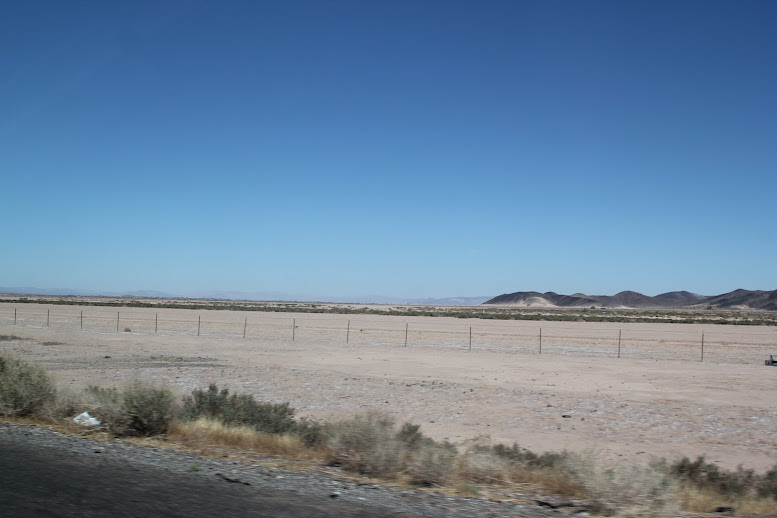
There was desert. Everywhere. Palm trees, desert, and—there she was—the good old Ford Focus with the trusty U-haul trailer still attached. We packed up our bags and hit the road for our final day in the car.

At about 1 o’clock that afternoon, Chris and I pulled off for what was to be our final gas stop. He’d driven the whole morning, in preparation for our last few hours, when I would take the wheel in order to brave the big bad Los Angeles freeway system with a slow-moving trailer.

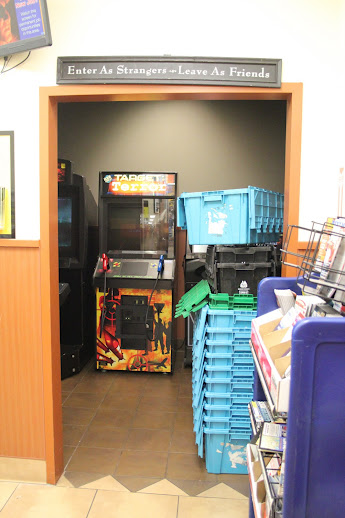
The saddest room in a gas station in CA

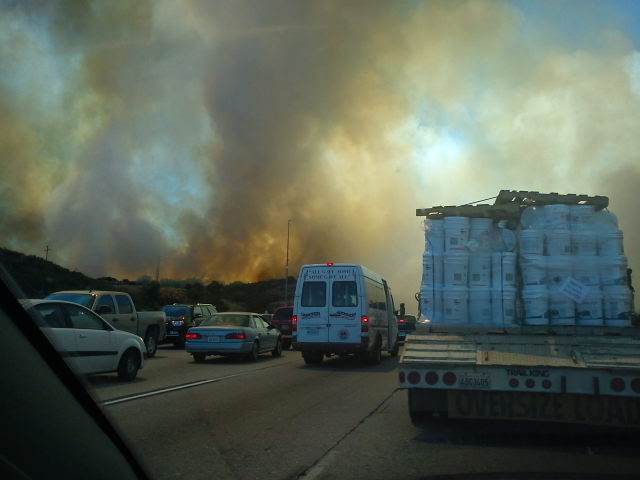
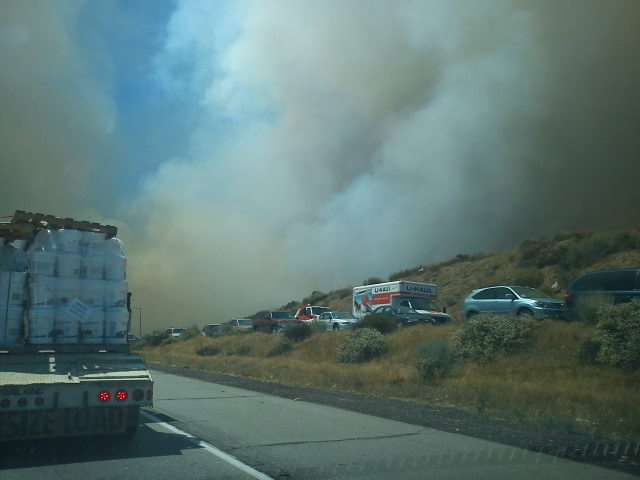
We fueled up, and then I swung into the driver’s seat and pulled out onto I-45.  About 45 minutes later we started to see smoke. As we got closer, we began making guesses at what it could be.  A house? Eh, who could say; it was too far away to tell. Bored, Chris went back to his book and I fiddled with the radio.

Then we hit traffic. Now, according to my handy-dandy smartphone (that I made Chris check, responsible driver that I am) we were about an hour, hour and a half outside of L.A., and part of me (the scared, “What if I hate this city? Can I actually do this?” part of me) was afraid that this was the edge of the fabled Los Angeles traffic. What if we were in this for the next couple hours? What if, for the rest of my existence, I find myself sitting in bumper-to-bumper traffic? What if–Alright, alright, calm down, it’s stop-and-go, at least we’re moving.

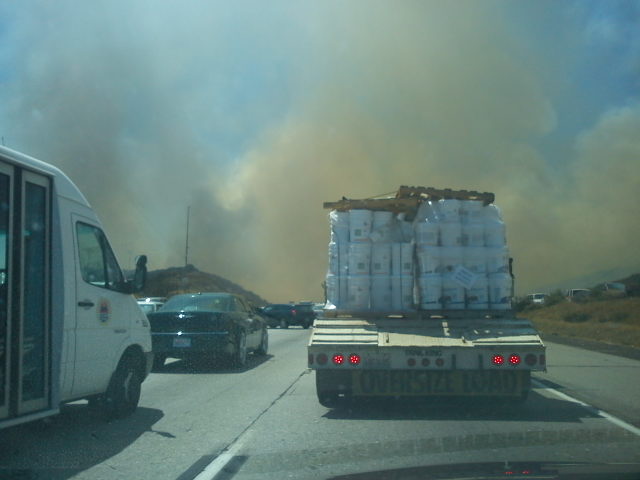
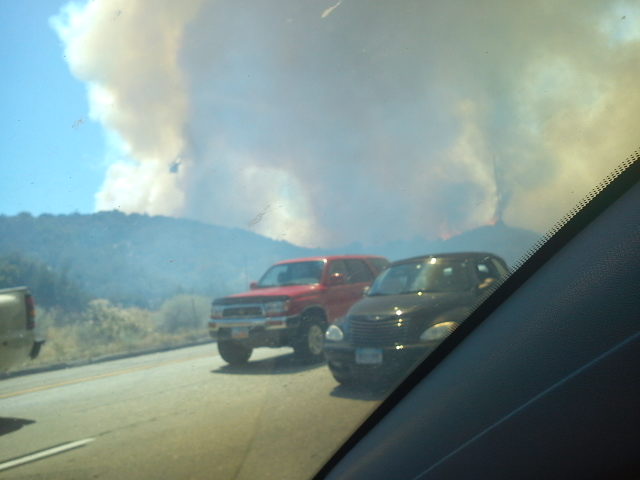
And then we stopped moving entirely. The smoke was right near us now, billowing in big brown plumes.  Hauling that trailer, we were in the far right lane, the truck and trailer lane, and we weren’t moving at all. Suddenly, we heard sirens. Out my side mirror I saw them: fire truck upon fire truck upon fire truck, racing past us on the shoulder. There were your standard red engines, but also larger ones, with “Wildfire Control” printed on the side.

“Uh, Chris?” I said.

He looked up from his book.

“What?”

“I think this fire is sort of big.”

“Yeah, seems like it.”

Back down to the page.

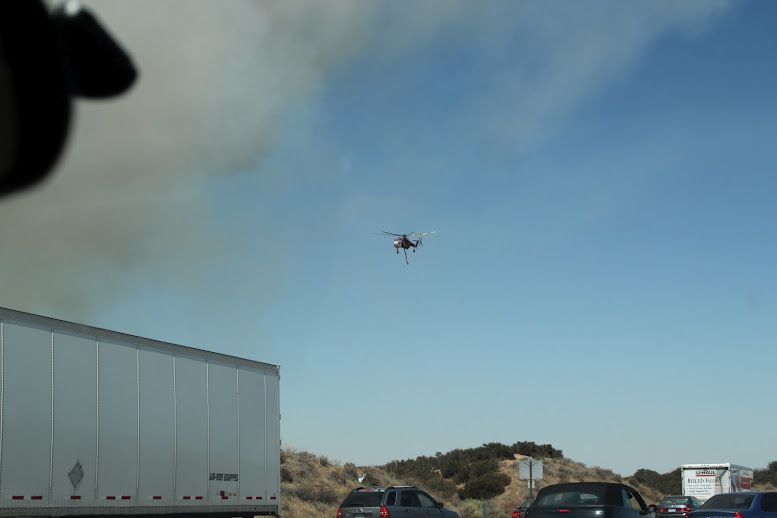
Then, above: thwup-thwup-thwup-thwup….! I ducked down to see the sky through the windshield. Above us was a helicopter, dumping liquid on the fire.

We still weren’t moving. The smoke was getting thicker and thicker. While it had started on the right of the car, suddenly there was smoke billowing on both sides. I looked around. On the opposite side of the highway, four lanes across, cars were starting to turn around, using the shoulder to drive the wrong way down the freeway, away from the fire.

“Chris? It looks, um, really big.”

He finally looked up from his book. To our right was an entrance ramp. We looked to see cars driving the wrong way up the ramp, fleeing the flames ahead of us. There was a huge semi in front of us; our view was blocked from how close we were to the fire and then suddenly: to our left, it breached the hill.

We watched in horror as a shed not a half a mile away from us was consumed by flames in milliseconds. The fire enveloped a flagpole and burned through an American flag as fast as we registered what it was doing.

“Oh. My. God,” I breathed. “What do I do? What do I do??”

I struggled not to panic. The flames were close, much closer than anyone would like, but I couldn’t see any fire trucks nearby… I kept looking for a cop or a firefighter or some kind of authority figure to tell us what to do and where to go. But there was no one. Everyone was too busy fighting the fire, and no one was there thinking about the bystanders just trying to get out of the way. No one.

But there was Chris sitting in the passenger seat, his book long abandoned, telling me in the calmest tones possible, “Megan, we have to wait for the truck ahead of us to turn onto the entrance ramp before we can go. We just have to wait for the truck to move and then it’s our turn.” I looked over: there was still a big line of cars driving up the ramp, fleeing the flames.  We had to wait for the truck to move or we could get stuck. The only way around the truck was on the shoulder to our right.  But the truck wasn’t moving at all.

I inched forward, very aware that I had not been at all trained in the art of backing up a car with a trailer attached. I heard my dad’s voice ringing through my head: “You could jackknife that thing, easy. Just make sure you never get into a situation where you need to back it up. Just always pull through.” The truck in front of us wasn’t moving and there was at least a truck’s length in front of it. In fact, the truck in front of us wasn’t even running.

“Oh my god,” I said, as it dawned on me. “The trucker—he abandoned his truck! He just abandoned it. He’s not there anymore! He just left! He left it!”

I couldn’t stop talking. Chris was stunned. In my rising panic, I briefly toyed with the idea of doing the same thing as the trucker, leaving all of my prized and not-so-prized possessions in the car to be consumed by the flames. Everything would be lost: my passport, my books, my clothes and camera and computer; even old love letters, tax returns, photographs. But we’d be safe. We’d run through the tall grass on the side of the road until we weren’t breathing smoke anymore. Then some weatherworn trucker would pick us up and drop us in the parking lot of the nearest hotel or gas station with a “Just be happy you got alive, kids,” before he cruised away. It’d be like straight out of an action movie.

With the smoke getting thicker around us, it felt like straight out of an action movie.

“What do we do? What do we do??” I repeated, feeling my hands start to shake.

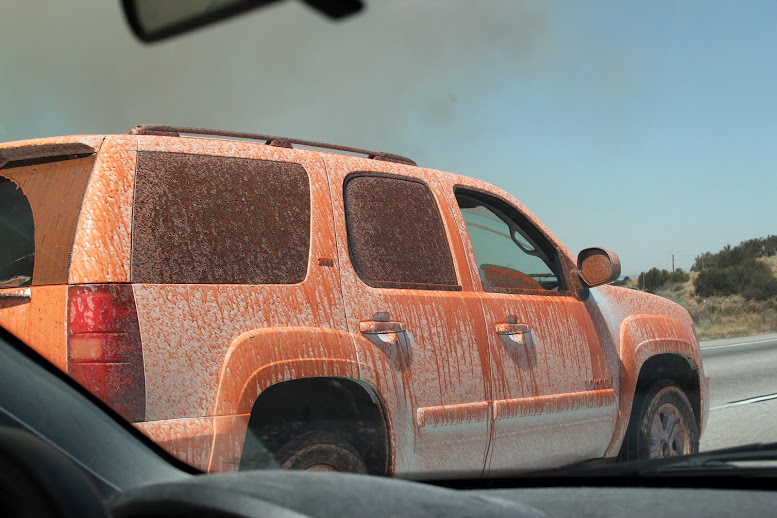
At about that moment, we started to see even more cars driving up the shoulder, on both sides of the road now. If we decided to zip out on the right-hand shoulder to get around the abandoned truck, we’d risk a head-on collision with someone coming from farther down the freeway.  In fact, these cars were definitely from the frontlines because they were covered in bright orange anti-flame retardant, the stuff the helicopter–no, now three helicopters–were dumping on the wildfire all around us.

I looked around, and made an executive decision.

“I’m going to try to turn around,” I said. “We can’t go around that truck and so we have to get on the shoulder on the other side of the road.”

“But you can’t back up the trailer.”

“I’m going to turn around,” I repeated. “We have to get out of here. We have to get out of here.”

The smoke was billowing even thicker now, blotting out the sun. It reminded me of a solar eclipse I once watched through a tiny hole in a piece of paper in 3rd grade. I wondered, briefly, if I should be looking at the smoke through a hole in a piece of paper too.

Gripping the wheel hard, I turned on my signal and put the car in drive. Thankfully, we’d waited so long that the traffic had cleared out more: so many people had already pulled their cars around on the shoulder and fled before us that the lanes were more open.

We must have looked panicked, two kids with very out-of-state plates hauling a little U-haul trailer behind us, flushed in terror, because someone let us in immediately. I craaaaaanked the wheel and we held on as I started the turn. And then, at last, I exhaled: we’d made it, a full U-turn across four lanes of freeway, and clunked out onto the shoulder of I-45, heading the wrong way down the freeway. With traffic, much of it splattered in orange, but going the decidedly wrong direction down the road.

“We’re okay! We’re okay!!” we shouted and pumped our fists, like so many action stars before us.

After we made it off the freeway at last, I’d like to say we found an easy route around the wildfire and made it to L.A. without any further incident. I’d like to say it was the breeziest part of the trip. I’d like to say we spent the rest of our hour to hour-thirty minute trip marveling at the wildfire and our superhero brush with death.

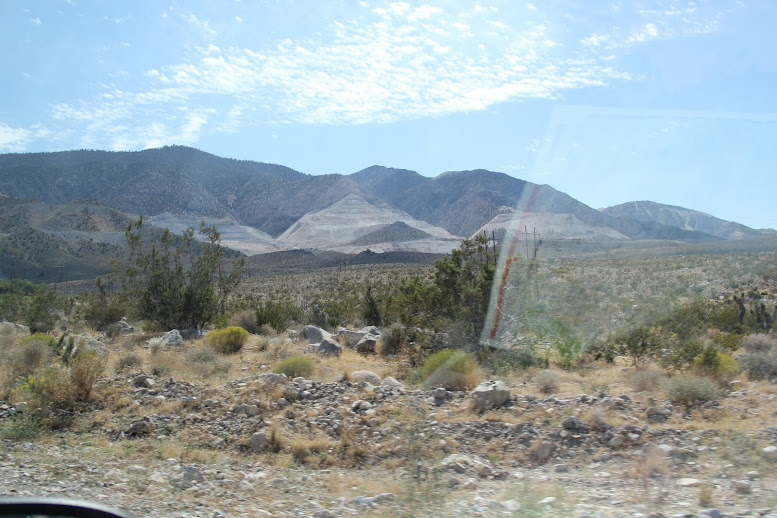
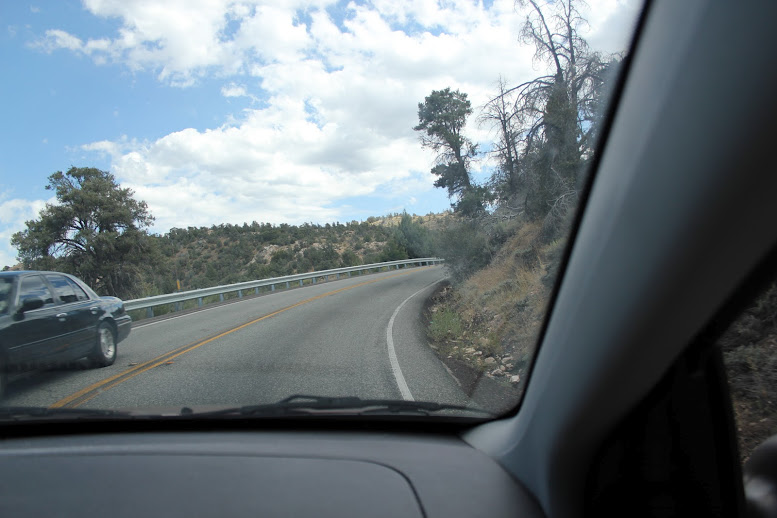
None of this happened, of course. Instead, after we made it off the freeway at last, we pulled out a road atlas and picked out a new route along a nice county road. It seemed like a pleasant enough journey at first, until the mountains starting rising up in front of us in a sheer wall.

“That’s…that’s not our road, right, Chris?” I said, very aware that the car groaned with effort at even the slightest change in incline.

He re-consulted the map.

“Nah…”
We kept driving, heading closer and closer to the mountains.

“Chris…”
“Wait, wait, wait, hold on. Let me look at this…wait. What are these green dots on the road?”

“Green dots? What green dots??”

“Oh. Uhhh…the green dots mean ‘scenic route.’”

“WHAT!” I almost lost it.  “We do not want a scenic route! We want a decidedly UNpretty, UNeventful, UNscenic route! Pick another way! Find us another way!”

Chris held the map closer, squinting at the tiny roads.

“Hold on. Hold on. Uh. Megan? We might be in trouble…”

“Why?”

“Well, we’re trying to get through a national forest and I-45 was kinda are only main way, but that way is obviously, um, burning. But there are other roads!”

“So pick another road!”

“But here’s the thing: They’re…they’re all scenic routes!”


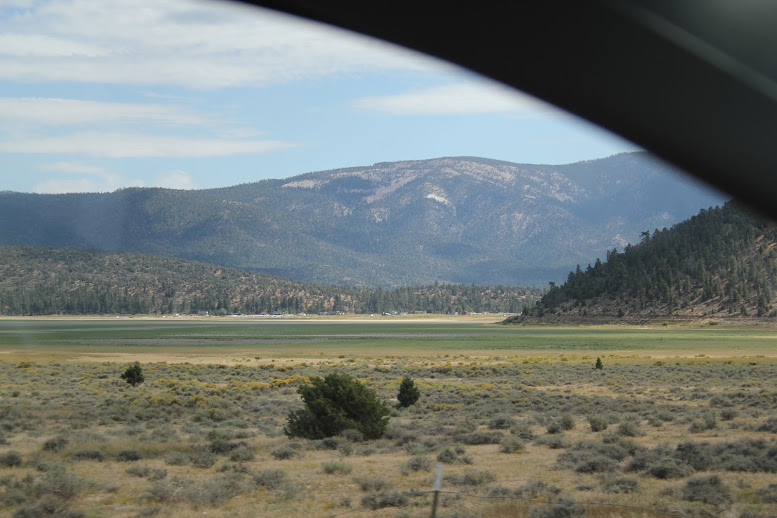
Nearly three hours later, after the car began to bottom out at literally 10 miles per hour, and after an old lady gave us the finger as she passed us in sheer frustration going the wrong way on a blind curve up a mountain, and after I thoroughly sweat through all of my clothes, we made it through the very narrow, very steep and very scenic mountain pass.

And then, after about an hour of that good old L.A. rush hour traffic, we made it to Los Angeles and my new home,  after a full five days of driving and nearly 2200 miles. We were nearly five hours later than we’d anticipated. Exhausted, we piled out of the car. And as we opened up the Uhaul trailer and began unloading my possessions into my new room, I couldn’t help but think, “Well, no matter what happens, no matter if I make it as a screenwriter here in Hollywood or go home crying and defeated, there is 100% no way L.A. can be as intense as that afternoon.”

And you know what, dear reader? On that, at least, I’ve been right.

~Megan~

Part 1 – Road Trip West Introduction

Part 2 – Wigwam Motel

Part 3 – The Grand Canyon