Tri biking

Crazy – Part 2: Race Day

Trying a Triathlon, Part 2: Race Day

(Cont’d from Part 1) The morning of the race was clear and cool. Since it was August, the race started at a pleasant 8 AM. I was up at 4:45, already chugging water to stay hydrated. The night before, a friend had helped me clean up my bike, greased the gears and pedals, pumped up the tires, even adjusted the stem. Its beautiful drop-down handlebars were freshly wrapped. I felt like a jockey before a big race, patting my trusty mount.

When I arrived at the race area, I got my race number (25! A good, solid number, I told myself) written in black permanent marker on my arm, thigh and shin, so I could be identified both in the water and on land. I quickly realized I never wanted to wash that number off again. I jogged around to warm up, shakily swigging water, my stomach fluttering.
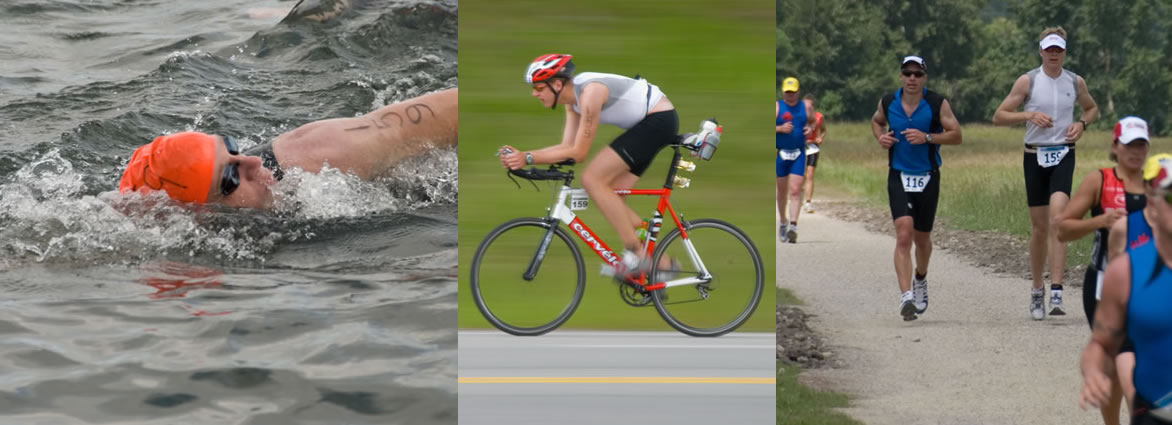
As one of the younger participants in the race, I was in the first wave of swimmers. About fifty other women and I lined up on the beach in our red swim caps (“free” race swag!). The gun went off. And so did we!

Swimming in a pool is one thing. Swimming in a lake surrounded by bodies while being kicked in the face is another.

Months earlier, when some of my female coworkers heard I was doing an all-women’s triathlon, they thought it was so neat. “Oh, it’ll just be so nice, having other women there to support you as you go along,” they told me over our microwaved lunches. I nodded politely. It was nice, wasn’t it?

That was not the attitude I decided to take. I’d dropped nearly half a grand to get to this race. I wasn’t here to hold hands and braid each other’s hair, thankyouverymuch. Anytime someone kicked me, I pushed back, jostling for space, and, as people began to feel the swim halfway in, I began picking off the enemy, one by one.

With a final stroke, the swim portion was done. We lurched out onto the sand, ran past the lines of screaming fans (screaming, I tell you!), and up into the Transition Area.

The Transition Area in a triathlon is hallowed ground. Only tri participants can go in or out; spectators are banned. Each racer is assigned to one lane, and that lane consists of a metal sawhorse of sorts, on which you prop your bike, and a very small area near to it, where you put your shoes and socks, towel, and water bottle. Transitions between the races count toward your total time, so the name of the game is speed. I’d practiced transitioning a bit in my backyard, aware of how silly I must look to the neighbor cats who watched me from their window perches, and now was my moment. I ran in, dropped my goggles and cap, shakily got on my socks and shoes, threw on my helmet and away I went. Transition 1, done.

Next was the bike portion. This was by far the biggest part of the race at 15 miles in length. I let Ol’ Blue stretch out her legs and we were off.

The bike portion was along the Mississippi River, on both the Minneapolis and St. Paul sides. Since I lived nearby, I’d spent many Sundays biking the course and beyond.  My main concern for this part of the race was the no-drafting rule. Drafting is when you follow closely behind a biker, using that person’s slipstream to your advantage. There was a strict no-drafting rule, which meant you had to stay a minimum of three bike lengths behind a biker. If you wanted to pass, you must do so in 15 seconds or risk a time penalty.

I’m not sure how seriously the rest of the women interrupted this rule, but for me that meant that, if I were at all able to, I needed to pass anyone in front of me as quickly as I could, every time I saw her, or risk breaking the rules, something I’ve been afraid to do basically since birth. Midway into the bike race and my legs were shaking. Perhaps I’d gone a bit too hard. Perhaps this rule wasn’t meant to harm me.

“It doesn’t matter!” I egged myself on, sipping my Gatorade-water mixture to help me through.

The second half of the bike race proved to be a bit harder than the first half, mostly because the wind had picked up. Dramatically. We made it over the bridge near the Transition Area all but wobbling on our bikes in the gusts. I dismounted and ran my bike over to my lane. Propping my bike up on the sawhorse and throwing down my helmet, I jogged off in a minute flat. Transition 2, done. Now only 5k left to go!

There is a phrase in triathlon-speak called “bricking.” Bricking happens when you get off your bike and try running immediately afterward. It feels, appropriately, like your thighs are made of heavy bricks. Try (tri!) as you might, you can barely lift them. I’d practiced doing this, too, some that summer, but my quads were screaming from the bike race as I started out around the lake.

“Go go go!” my fans shouted at me. I lugged my body along, wind whipping my hair.
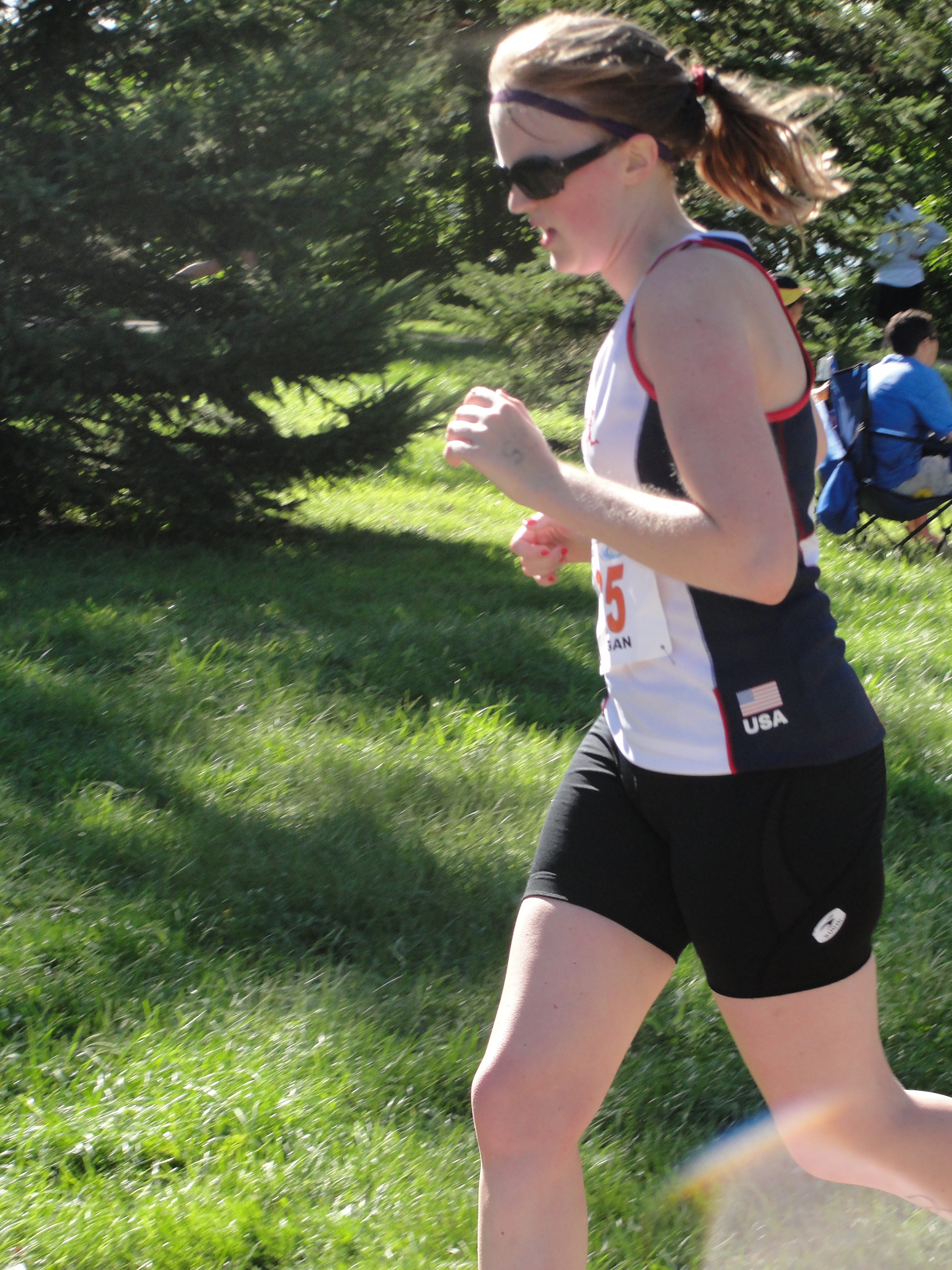
I was a mile in to the five kilometers when my shoe came untied. I ignored it. I was hardcore. I was a racer. I was doing a triathlon. A little untied shoe was not enough to make me stop!

A half a mile later and it was all I could do to keep running. It wasn’t that I was feeling sick or tired, at least not so tired that I couldn’t continue. It was that I had never had to pee so badly. Ever. All that hydration, all morning, all during the bike portion, and at each transition…all of it had backfired, big time. I willed myself to just…go…as I kept running. My shorts were black; no one would notice! And I could just jump in the lake right afterward. No big deal! But, like rule-breaking, peeing on command has never been something I’ve been good at. I was doomed. It was all I could think of, with a mile and a half left into my race, the race I’d been training for for months, when I should be thinking about picking it up, picking off people one by one, as the minutes clicked away on my time. All I could think of instead was…water.

I rounded a curve in the path. A water stop was up ahead. I was definitely not interested. But just beyond it…What was that there? Could it be…? Yes! A port-a-potty! I was saved!

And yet: Should I risk my victory for this pit stop? Was I such a fool? I looked around. The race was so spread out it was impossible to tell who was my competition and who had started minutes after me (the swim waves were staggered) and was therefore so far ahead of me, time-wise, that there was no way I’d beat them.

I stopped at the port-a potty, anything for some relief. An older couple out on a morning walk had stopped just ahead of me. I bounced around impatiently as the woman used the toilet. Breaking all rules of Midwestern propriety, I pleaded to the gentleman to let me go before him.

“I’m running a race,” I explained, pointing unnecessarily at my race number. “And I really have to go!” I hopped from foot to foot.

He rather begrudgingly agreed to let me cut, and, once his wife eased her way out of the stall, I bolted in. I relieved myself, tied my shoe, and, liters lighter, zoomed off after my opponents.

A mile left. My feet pounded on the pavement.

Then half a mile.  My lungs ached. Now was my time to go, this was it. This was it. I rallied, willing my legs to turn over faster. They shouted in protest, reminding me of the fifteen miles I’d just biked, and all a bit quicker than they’d been promised.

A third of a mile.

I could see the finish. Just around a curve, down the stretch, and I’d be there.

A quarter of a mile.

There were other women ahead of me, exhausted from the morning, like me. We could all just jog in together, nice and easy…

300 meters.

“Now!” said a voice in my head. “Now’s your time! Think of all the workouts, all the sweat, all the pain it’s taken to get here. Now go go GO!”

200 meters.
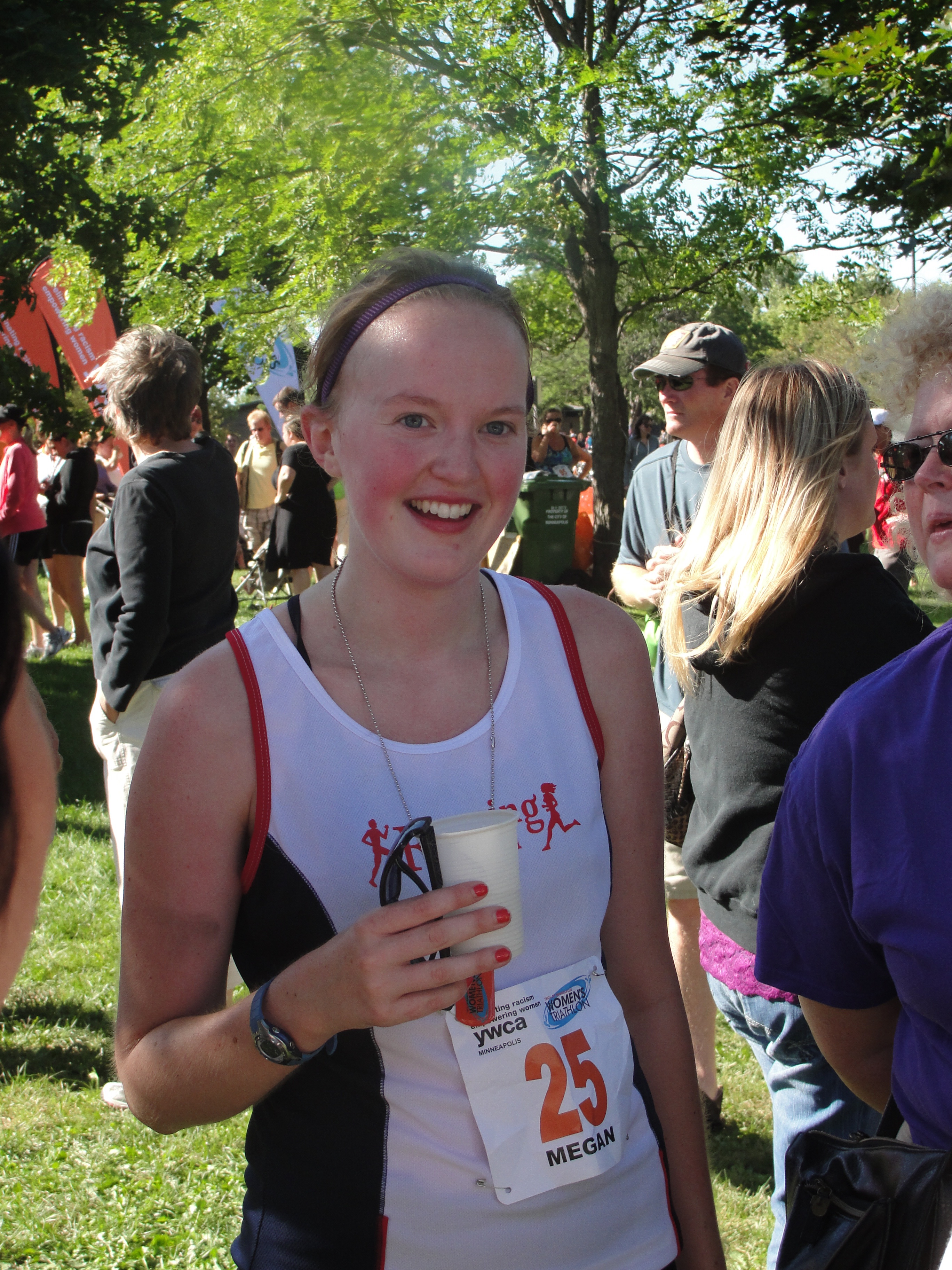
I lifted up my head, picked up my legs and pumped my arms down the last stretch. And when I crossed that finish line, I became, officially, a triathlete.

I can’t wait to do another one.

~Megan~

Megan has just returned stateside after a year of living and teaching in China.  Any guesses whether there’s a Triathlon in her future?

The symbol for triathlon in the Olympics

You Don’t Have To Be Crazy But…

Trying a Triathlon: Part 1: Preparation and Training

The symbol for triathlon in the Olympics

I decided to start training for a triathlon in my rather dusty office cubicle in February of 2010. My office was in St. Paul, MN, at a public university, where I worked as an Americorps VISTA volunteer, helping expand the nursing programs to increase healthcare access to low-income patients, including setting up a community clinic. That last venture had completely stalled in contract negotiations with the local community center, and, since it was to be the vast majority of my job, I was bored. Underutilized, and bored. Left to my own devices, I spent a lot of time trolling the Internet, looking for random healthcare funding (that my school inevitably didn’t qualify for) and reading articles about healthcare on the New York Times webpage (that’s work, right?).

I needed direction, in or outside of the office, it didn’t matter. Having graduated from college the previous spring, 2010 was the first time in my life that I didn’t have any direction, didn’t have a clear syllabus with assignments carefully outlined. I found I missed it.

Since my cardiovascular-heavy semester in Eastern Europe (See Running 5 Polish Miles), I’d maintained an okay workout regimen of five days a week running, biking or swimming. Yet I just didn’t feel any spark in any of my workouts. I’d slog off a handful of miles on a treadmill or sweat away on a stationary bike while watching re-runs of Top Chef at the gym after work, then shower up and go eat dinner. Who cared.

And then it struck me: Since I was already running, biking and swimming, why not combine all three? Swim + bike + run = A triathlon! Hey! That was something!

I began cruising the Internet with a purpose. The length of these races was incredibly daunting at first, even the so-called “sprint tris,” which quickly became the only ones I was looking at. Sure, I could run 5 km or bike 15 miles or swim however many laps but combined? Um…

The second thing that concerned me was the price. Triathlons are no picnic to organize, I’m sure. They have to block off roads and beaches and parking lots. They have to hire lifeguards, police officers, and medical teams, and all the myriad of other things that goes into planning not one, but three races. And all that costs money, honey. As was quickly obvious by the registration fee for most of the tris I was finding: between $75 and $125. For one (three-in-one) race. Oi.

Let’s pause here for a moment to review a few facts. 1) I’m a recent college grad (two words: student. loans.) 2) In 2010, our country was—and still is today—recovering from the greatest economic recession we’ve had in years. 3) At the time, I was an Americorps volunteer. This last point is the most important, because Americorps volunteers get paid a very measly living stipend…a figure that puts them at the poverty line of wherever they’re serving…a figure so small I qualified for (and used) food stamps (A fact I always thought my alma mater probably wouldn’t be too eager to include in their latest admissions brochure: “Come to our college! When you graduate, you can get on food stamps only a few months later!”). Basically, it boiled down to $100 for a registration fee being a bit nuts for my monthly budget.

I sat on the idea.

Work stalled. Working out stalled.

Spring rolled around. I couldn’t take it anymore. Encouraged by my boss, a recent fitness convert (Don’t you love when someone can so utterly transform their lives, right in front of your eyes over the course of one short year? That was my boss during my year of Americorps service.), I looked up triathlon races again. The price had gone up.

I looked at my bank account balance, bit my lip, and went for it. A few minutes later, the confirmation email swept into my inbox. I was officially signed up for the YWCA Minneapolis Women’s Triathlon  on August 15, 2010.

The spring and early summer went by in a blur. Suddenly bent with purpose, I increased my workouts to six days a week. I ran around a track in blistering heat, swam between buoys at the lake nearby, and biked for miles on my old purple mountain bike, which dated all the way back to my junior high years.  I felt awesome! I was training for something! I was an athlete!  And yet…

That bike was going to be a problem. In all of my visions of triathlon glory, of me flying through the water like Michael Phelps and peddling the course at, like, 500 miles an hour, and leading the pack—no, breaking ahead of the pack!—during the road race, the bike was not in them. Its clunky gears, its thick and gawky wheels, its upright handlebars, its too-small frame…none of them were synonymous with my sure victory.

It had to go. Now bikes, as many of you may already know (and as I did not at the time), are really expensive. What’re a few gears and some rubber tires doing costing hundreds upon hundreds of dollars? I ask you. New bike, out. Used bike, in! I found one, a women’s Schwinn road bike that’s probably older than I am, at a used bike store in south St. Paul. I broke up with my purple mountain bike on the spot, and biked the blue one home.

Next stop, race day!

~Megan~

The Red Dirt Highlands of Western Kenya

Where Dreams Don’t Fade

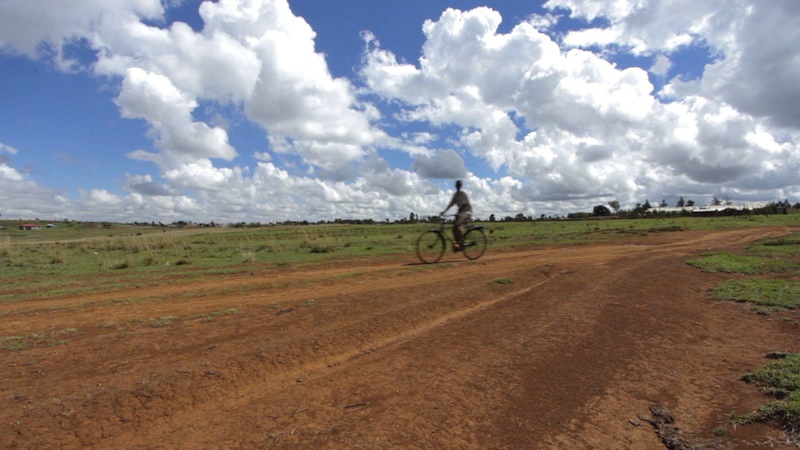
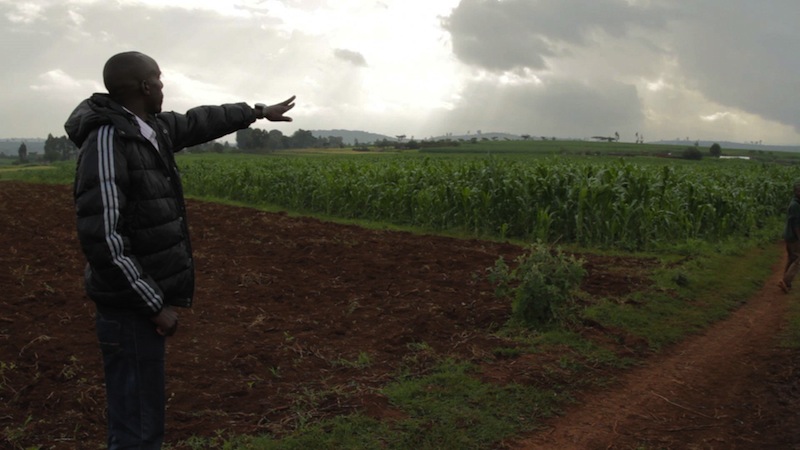
In the red-dirt highlands of western Kenya, 200 miles from the capital, Nairobi, rests the 4,000-person town of Iten. Remotely situated among the peaks and basins of the Great Rift Valley, the settlement’s 2,400-meter elevation and female mayor distinguish it from many Kenyan towns, but it’s truly extraordinary for another reason. Iten, as well as nearby Eldoret, form the epicenter of Kenyan running culture. Today hundreds of athletes—some aspiring, some well-established—train in these towns at camps founded by former and current champions.

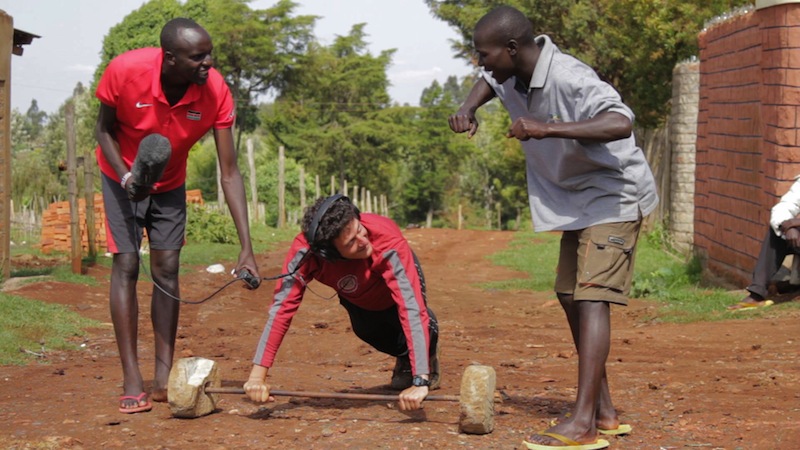
People from all over Kenya and the world trek like pilgrims to the region for training; this year my friend Martin Mudry and his one-time cross country teammate, Alex Nichols, made the journey, but not just to run. They’re making Where Dreams Don’t Fade, a documentary about three Kenyan runners and the sprit that drives the world’s most decorated running nation.

In many ways, Iten represents the ideal place to capture the essence of great running. For pure saturation of speed, few if any place can rival the town and the surrounding area, where the Kalenjiin tribe have lived and trained on their way to winning more international medals in 800-meter to marathon races than anyone. Not every Kenyan blazes on the track or trails, but Alex said, “The percentage of people in Kenya we would consider runners has to be so much higher than it is in the US.”

Martin and Alex both enjoyed running success in the United States. A year after a 2007 trip to a running camp in Ngong—just southwest of Nairobi—hosted by Olympic Silver Medalist Wilson Boit Kipketer, Martin finished second in the Minnesota Athletic Conference cross country championship. Alex has top-five finishes in major trail races, including the grueling Pikes Peak Ascent; but now they’re shooting film while living and training beside world record holders.

Kenya, Martin says, is a place where many people are literally the best or “believe they can be the best runner.” To an unaccustomed observer, therefore, the camps can seem surreal. “It’s like a lot of amateur basketball players being invited to train with LeBron James, and then stay in his pool house,” he said.

While approaching “King” James about documenting his life and shooting some hoops with his entourage might sound intimidating, the attitude of Kenya’s future and current greats made the two filmmaker’s initial job easy, and bolstered their running confidence at the same time.

“They make you feel welcome,” Alex said. “It doesn’t feel like a big deal that they’re the best in the world.”

The great runners, Martin added, “the guys that are superfast, they’re not going to avoid you because you have a slow personal record. Everyone’s allowed to run together and it’s always encouraged, and that makes you feel like you can run a 2:10 marathon—maybe it’s not true, but you feel that way.”

The unflappable belief and determination of Kenyan runners constitutes the core of Where Dreams Don’t Fade. The film specifically documents three Kenyan runners in various stages of chasing their goals: Robert, a talented runner in high school, who aggravated back injuries in the military and started a family and business while waiting to train again; Virginia, a college graduate trying to get a job so she can afford to train full-time in Iten, so she can make money and get a Masters; and Alex, the brother of a Bronze Medalist at the Track and Field World Championships, who is training at the camp in the hopes of attracting a full-time manager.

Martin and Alex, who currently live at the camp of James Kwalia, himself a Bronze Medalists at the World Championships in 5000m, chose the trio because of their on-screen charisma and the nature of their stories. Like many Kenyans, Martin said, “they’re pursuing running in the face of many challenges, but what’s more unique is that all three are going after these running dreams even though they don’t have to or even though they could be pursuing other things.”

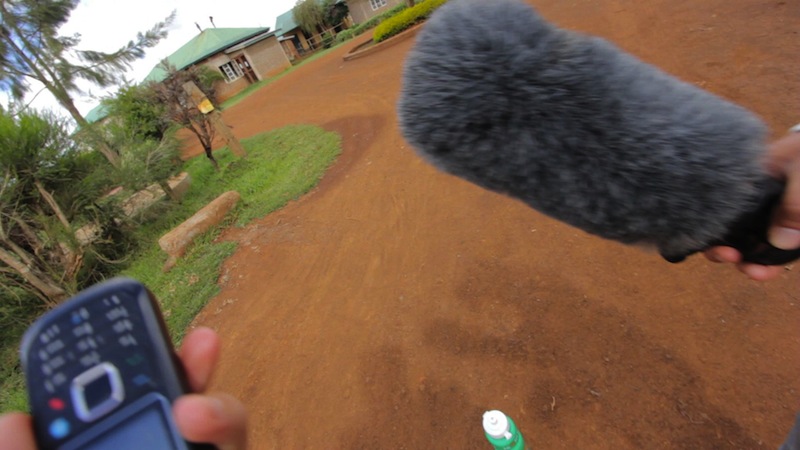
Capturing the paths of three distinct lives on film has its share of rewards, but also challenges, largely from a scheduling point of view. After making the important creative decisions in the first month, Alex and Martin set to logging the dozens of hours of footage they’ll likely need, but progress isn’t nearly as fast as the morning training sessions they attend.

Miscommunications happen, meetings get missed, and “people don’t always know where they’re going to be in two hours,” Alex said. “They think they’re going to have lunch, but maybe they decide to go on a long run.”

For people making a running documentary in Kenya, however, runs serve more often as sources of amazement than of frustration. “There are so many people at such a high level here, you can see a world record holder being beaten in a workout by some person you’ve never heard of,” Alex said. “It’s just exciting you can be a part of it.”

As for their own goals, Martin and Alex look toward September, when they hope to have Dreams edited in time for a submission to the Sundance Film Festival.

~Will~

Where Dreams Don’t Fade is now available for purchase on DVD

1175543_693869900651707_5377128354472382492_n

mongolian celebration

Sunny Spot Travel Tips

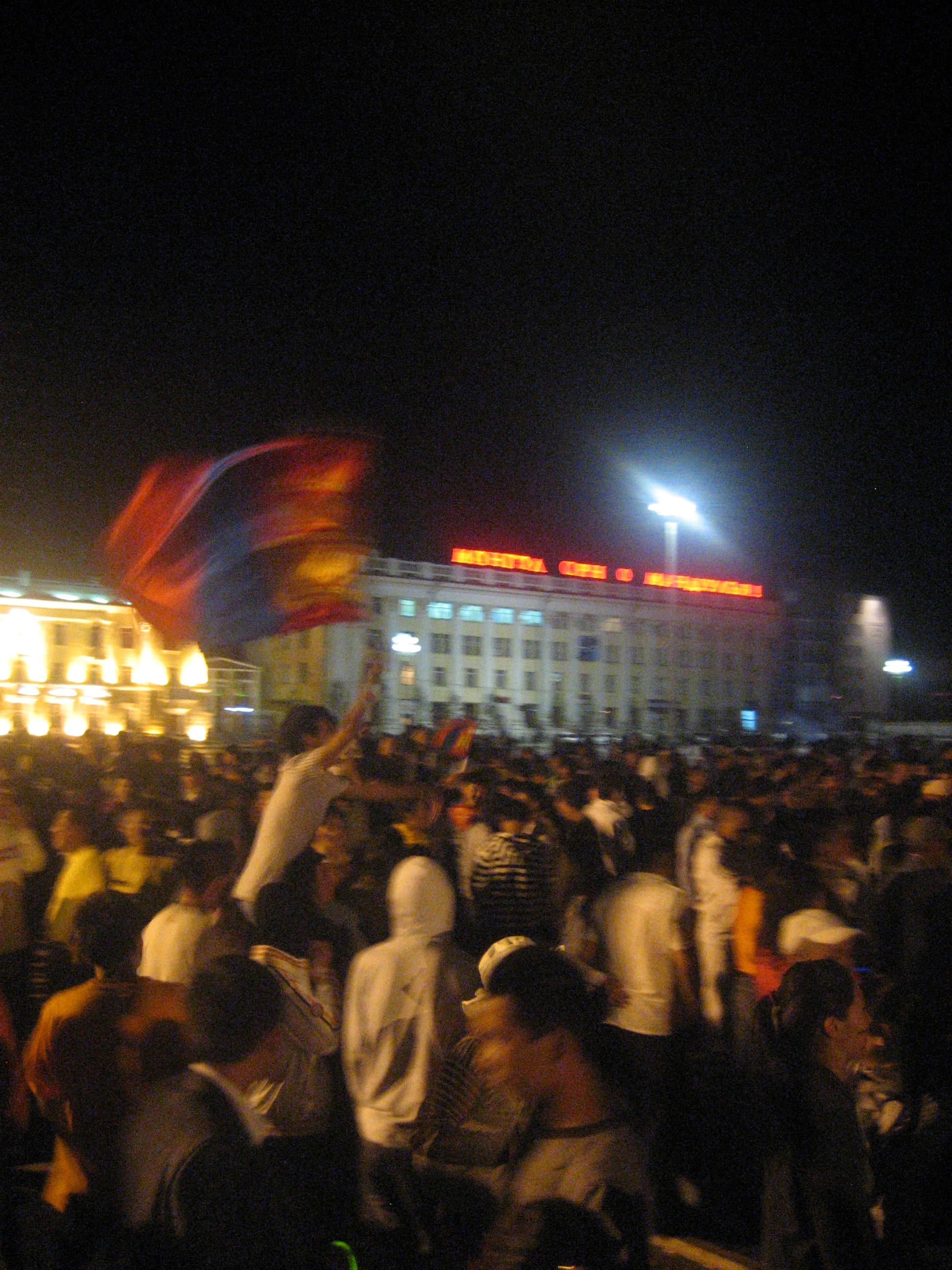
JULY 2011 – Celebrating Independence & Freedom

We’re introducing a new feature this month:  Sunny Spot Travel Tips.    What better way to experience independence than by traveling?  Flying high – breezing down a highway – trekking up a mountain – running in the jungle, swimming in the ocean – or just strolling down a street and discovering the world’s best cup of coffee!  Our writers travel the globe for their own entertainment and adventure and they bring their stories to life on this website under our Sunny Spot page.

Now we’ve decided to take it a step further by providing some unique TIPS on making the most of YOUR travel to these fun and sometimes exotic places.

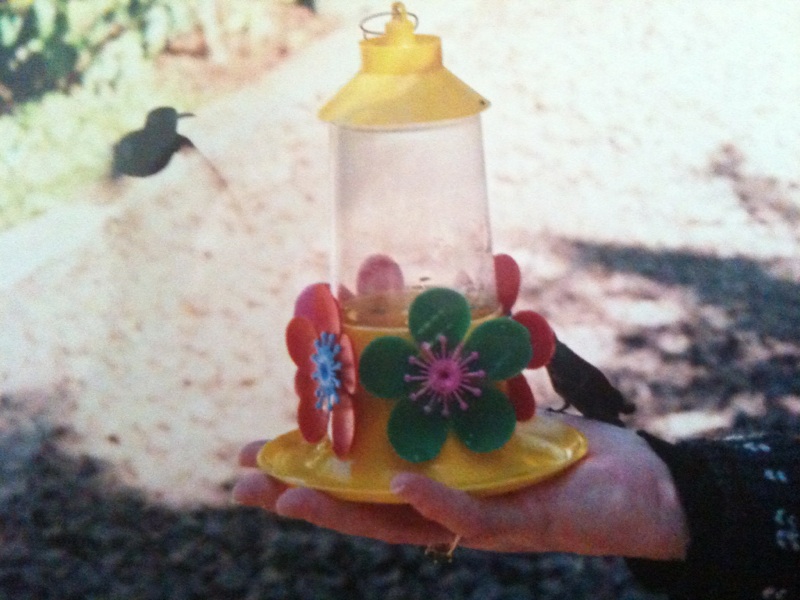
For example – did you know that in a lovely little back-yard of a private residence, in a small town just outside of Iguazu Falls in Argentina, asking only for a donation, the owners will invite you to enjoy a breathtaking opportunity to watch and feed hummingbirds (as well as parrots, and other colorful Aves).

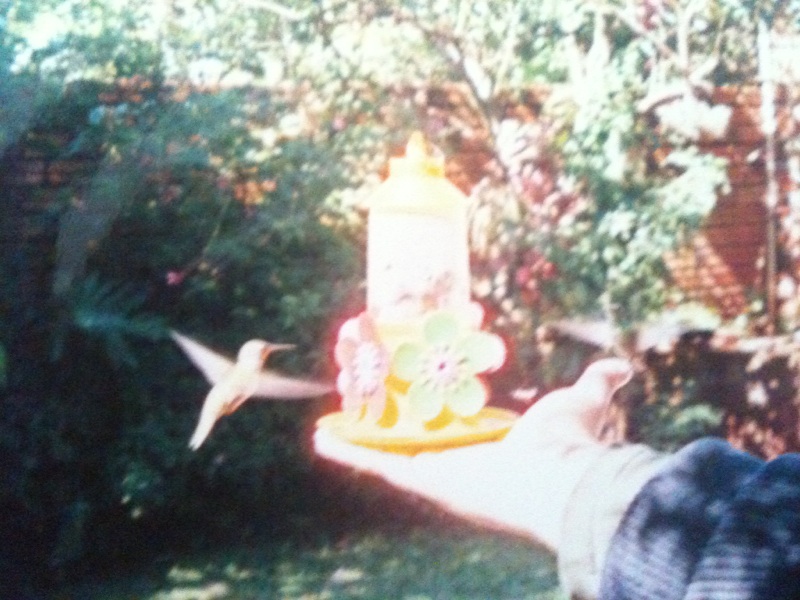
And this is the truth:  If you can sit very still, the hummingbirds will actually land on your fingers to feed from the globe in your hand!  Talk about a Zen experience.

So How was this out of the way and off the beaten track place discovered?  Rosemary was traveling in the area and coincidentally ran into a friend from college who had just been there because he had heard about it from another friend who had stumbled across it on her travels in the area!  Amazing all the way around!

And here’s a special offer to our readers:  If you’re planning a trip to any of our Sunny Spots (or even a place we haven’t written about) – we invite you to send us a note with your questions and we’ll give you our perspective on the best ways of Entertaining Yourself while you’re on the road or overseas.

Because traveling beyond your everyday life (either for real or through someone else’s account) is an amazing way of experiencing the joy of freedom and growth.

-EY Staff-